
Top Accounts Receivable Trends for 2026

How Real-Time AR and Embedded Payments Will Transform Finance and Customer Experience 

AR Is Entering Its Most Transformative Year Yet 

Finance teams are entering 2026 facing tighter cash flow, rising customer expectations, and increasingly complex operational environments. What was once a back-office workflow—Accounts Receivable—has become a strategic function tied directly to financial resilience and customer satisfaction. 

Deloitte’s 2026 Finance Trends Outlook highlights that finance organizations are rapidly shifting toward real-time, continuous insight to support faster, more agile decision-making. That shift places AR at the center of modern financial performance: responsible for accurate reporting, stronger forecasting, and a more reliable customer experience. 

As finance leaders expand their enterprise influence, AR is evolving into foundational financial infrastructure—grounded in accurate, connected, always-current receivables data.

2026 Trend #1: AR Becomes a Customer Experience Function

Accurate, intuitive AR interactions now influence customer trust and retention. 

In 2026, every AR touchpoint—every invoice, balance inquiry, portal login, or payment attempt—will shape the customer relationship. Businesses increasingly expect the same level of clarity and ease they get in consumer commerce. 

But fragmented AR processes create delays, confusion, and unnecessary friction. 
When AR is connected and consistent, it reinforces trust and strengthens long-term account health. 

This year, AR moves firmly from back-office execution into a frontline customer experience driver.

2026 Trend #2: Real-Time AR Powers Faster, More Confident Decisions

Finance teams can no longer rely on delayed or manual AR reporting. 

Traditional AR models—batch-based, manually reconciled, and slow to update—are no longer adequate for the pace of modern business. 

Deloitte notes that finance leaders are under intensifying pressure to support rapid, scenario-based decision-making amid economic and regulatory uncertainty. This level of agility is only possible when AR data reflects the current moment. 

Real-time AR visibility unlocks: 

  • Earlier risk detection
  • More accurate forecasting 
  • Cleaner, more reliable cash-flow insight 
  • Better alignment across finance, operations, support, and product teams 

In 2026, real-time AR becomes the new baseline for operational and financial confidence.

2026 Trend #3: Embedded Payments Become the Foundation of AR Accuracy

Instant payment data = instant financial truth. 

Even the best AR processes break down when payment data is delayed or siloed. If transactions happen outside the ERP, platform, or commerce system, AR visibility becomes out of sync the moment the payment is made. 

Embedded payments solve this by moving payment acceptance inside the systems where customers already work. With native, integrated payment flows: 

  • Balances update automatically 
  • Payment status is accurate in real time 
  • Reconciliation becomes dramatically easier 
  • Teams operate from a single financial source of truth 

In 2026, embedded payments will be essential to AR modernization and real-time financial accuracy.

2026 Trend #4: AR Extends into Every Customer Touchpoint

AR can no longer “live” solely inside the ERP. Customers move fluidly across channels, and AR must follow them. 

A modern AR ecosystem ensures that: 

  • A portal payment should sync instantly with the ERP 
  • A subscription renewal should adjust balances without delay 
  • A mobile checkout should influence cash-flow projections in real time 

This requires unified, integrated workflows that connect ERP, commerce, and platform ecosystems into a single financial experience

AR becomes the connective tissue between customer activity and financial truth.

2026 Trend #5: AR Becomes a Key Driver of Retention

Accurate billing and immediate confirmations shape customer loyalty. 

Trust is built on clarity. When billing, balances, and payment confirmations are accurate and instant, customer confidence grows. When they’re not, frustration quickly follows. 

In 2026, AR will directly influence: 

  • Subscription renewals 
  • B2B contract longevity 
  • Platform engagement 
  • Multichannel commerce satisfaction 

AR’s role will expand from collections to proactive revenue protection and customer-retention strategy.

2026 Trend #6: Automation and AI Raise the Stakes for AR Modernization

AI requires consistent, high-quality AR data to work effectively. 

Automation and AI adoption will accelerate in 2026—yet these technologies depend entirely on clean, connected, real-time financial data. 

If AR data is delayed, inconsistent, or fragmented: 

  • Automations fail 
  • Workflows stall 
  • AI-driven forecasting loses accuracy 

Deloitte notes that successful AI adoption requires strong data foundations—starting with AR, where financial truth originates. 

 Organizations that modernize AR will be best positioned to leverage AI for prioritization, forecasting, and workflow orchestration. 

How Fortis Helps Finance Teams and Platforms Lead This Transformation

Fortis enables businesses and software platforms to adopt these trends without disrupting existing systems. 

By embedding payments directly into native financial and operational workflows, Fortis helps teams gain: 

Instant Payment Activity 
Balances, statuses, and ledger entries update in real time—eliminating reconciliation delays. 

Real-Time AR Visibility 
Finance teams operate from clean, high-integrity data suitable for forecasting, automation, and AI. 

A Better Customer Experience
Customers enjoy smoother billing, intuitive payment options, and consistent confirmation across every channel. 

A True Transformative Partnership 
Fortis supports teams with hands-on expertise, flexible integrations, and a partnership model designed to drive long-term growth—consistent with our high-service, high-growth commitment. 

For CFOs and finance leaders, this means clearer forecasts and more informed decisions. For software platforms and developers, it means deeper product value, higher retention, and a modern embedded-payments foundation. 

Fortis turns fragmented invoice-to-cash workflows into a unified financial ecosystem that strengthens visibility, trust, and performance.

2026: The Year AR Becomes Strategic 

The trends shaping 2026 point to a clear shift: AR is evolving from a reactive process into a strategic growth engine. Organizations that unify payments, data, and customer workflows will move faster, deliver stronger experiences, and gain lasting competitive advantage. 

Fortis helps teams make that shift—one payment, one workflow, and one real-time insight at a time. 

Let’s connect and explore how Fortis can help modernize AR for the year ahead. 

Is Your Practice Leveraging Every Fortis Feature—or Leaving Efficiency on the Table?

Collect Payments Upfront with Web Payments

With Web Payments, your practice can collect payments at the same time new or existing patients book their appointments online. This reduces no-shows, increases commitment, and streamlines the experience for both your team and your patients. 

Customizable, secure payment forms make it easy to: 

  • Secure bookings upfront and reduce no-shows. 
  • Save team time with automated payment processing. 
  • Provide a modern, intuitive experience that reflects your standard of care. 

Whether it’s a workshop, community screening, or promotional event, upfront collection ensures you capture revenue while patients commit to their wellness.

Accept Payments Anywhere with the Fortis Mobile App

Did you know Fortis offers a mobile app available in the iOS and Android app stores? With it, your practice can process payments directly through Fortis—no extra systems required, and it’s already integrated. 

At a screening, workshop, or offsite event, the mobile app gives you convenient access to your payment platform—eliminating reconciliation headaches by keeping everything in one system. 

With the mobile app, you can: 

  • Accept credit card payments instantly at any event. 
  • Keep all transactions in one platform—no need for third-party apps like Square. 
  • Maintain full compliance and Fortis-grade security. 

It’s even better when you use both of them! By leveraging Web Payments and the Mobile App together, your practice can: 

  • Capture more revenue upfront and reduce no-shows. 
  • Eliminate the hassle of juggling multiple payment systems. 
  • Deliver a seamless, modern payment experience across every touchpoint. 

Fortis’ built-in payment features will not only strengthen those efforts but also simplify your team’s workload and improve the patient experience.  

👉 Have questions about Web Payments or the Fortis Mobile App? Reach out to our team anytime. We’ve also included a flyer you can bookmark or print to keep handy. We’re always here to help!

Share Fortis and Win.

Do you know another chiropractor who could benefit from Fortis’ powerful payment solutions? Send them our way and you could win a $200 Visa Gift Card!

Every eligible chiropractic practice you refer earns you one entry into our quarterly drawing– One lucky winner is drawn each quarter for a $200 Visa Gift Card. Referrals must be valid chiropractic practices not currently using Fortis. No purchase necessary. Terms and conditions apply. 

Know Your Numbers: Are You Collecting Enough to Cover Overhead?

Running a practice isn’t only about delivering excellent patient care—it’s also about making sure your practice remains financially healthy.  Overhead costs—both fixed and variable—such as rent, payroll, software, utilities, supplies, and fees remain constant, no matter how many patients walk through your door. 

That’s why knowing your numbers is critical. It helps you spot potential shortfalls before they become costly, reduce stress, and ensure you have the resources to grow, reinvest, or simply sustain your practice for long-term success.

Track multiple sources of revenue with ease  

Many practices struggle to keep a clear view of collections because revenue comes from so many different areas—intensive vs. maintenance care, supplements, exercise therapy equipment, massage services, screenings, workshops, events, and more. Without a way to monitor these revenue streams, it’s hard to know if you’re covering your true overhead, and can often lead to:  

  • Uncollected patient balances due to no-shows or declined payments.  
  • Missed opportunities to collect upfront for events or services.  
  • Reconciliation headaches that make it difficult to see real cash flow.

A key to financial health is to leverage technology to stay ahead and increase collections 

Once you’ve identified your fixed monthly expenses and budgeted for variables, technology is truly your BFF for tracking collections and ensuring revenue consistently exceeds overhead. 

A key tool within your payment’s platform is customized reporting. This will provide you clarity and control: 

  • View total collections: Track daily, weekly, and monthly revenue for recurring and one-time payments. 
  • Reconcile in real time: Auto-sync payments to the patient ledger reducing manual day-to-day reconciliation 
  • Automate failed payment follow-up: Let patients update their card on file and pay without staff intervention.
  • Break down your revenue by category: See where money is coming from—or falling short (e.g., wellness plans vs. intensive care, supplements, events). 
  • Export reports easily for internal review or accounting to get an accurate financial snapshot. 

With customized reporting, you streamline reconciliation, reduce human error, and gain actionable insights. 

Stress less, grow more, and focus on patient care with Fortis.  

We help you do more than collect payments—we help you run smarter. Maximize these features and count on our support every step of the way. 

Share Fortis and Win.

Do you know another chiropractor who could benefit from Fortis’ powerful payment solutions? Send them our way and you could win a $200 Visa Gift Card!

Every eligible chiropractic practice you refer earns you one entry into our quarterly drawing– One lucky winner is drawn each quarter for a $200 Visa Gift Card. Referrals must be valid chiropractic practices not currently using Fortis. No purchase necessary. Terms and conditions apply. 

Intelligent Flow: How Agentic AI Will Transform the Future of Payments

Why Intelligent, Connected Systems Will Redefine How Businesses Move Money

Businesses lose time and revenue every day to one simple truth: payments don’t think.

Automation can move money faster, but it can’t see around corners. Agentic AI can. It doesn’t just follow instructions—it learns from context, recognizes patterns, and recommends smarter actions in real time.

Consider this: A key customer’s payment is delayed by 48 hours. Automation sends a reminder. Agentic AI recognizes the customer’s payment history, notes their recent order increase, cross-references industry trends, and proactively suggests extending terms or reaching out with a strategic check-in.

That’s not just automation. That’s intelligence in motion—and it’s redefining how businesses move money.

From Automation to Intelligence

Automation changed payments for the better. It removed manual steps, reduced errors, and improved consistency. But automation can only do what it’s told. It follows instructions instead of understanding them.

Agentic AI goes further. It understands context, learns from patterns, and acts autonomously in real time. Instead of waiting for problems to appear, it anticipates them, and acts.

Imagine a system that identifies when liquidity is tightening and adjusts disbursements automatically, or reconciles an invoice based on patterns it’s learned from past behavior.   This is the shift from efficiency to intelligence—where payments stop being a process to manage and start becoming a strategic advantage.

Why It Matters: Turning Data into Strategy

Every transaction creates data—but most businesses can’t access or apply it fast enough to drive decisions. Agentic AI changes that, turning payment activity into real-time business intelligence.

AI-driven systems can detect trends in cash flow, identify anomalies, and recommend next steps before problems arise.  They don’t just report what happened—they show what’s coming next, helping finance leaders move from reaction to readiness.

For example: Instead of simply noting a slowdown in payments, an intelligent system might forecast, “You’ll need an additional $2M in working capital by Q2 based on current trends.” It could also alert your team that a key customer’s order volume is dropping and suggest a proactive outreach before revenue impact hits.

The result is faster decisions, fewer surprises, and stronger financial control—because when payments become predictive, strategy follows.

The Technology: APIs as the Arteries of Intelligent Commerce

The modern economy runs on APIs. They connect systems, partners, and platforms, allowing payments to flow securely across environments. As AI becomes more integrated into operations, those APIs are evolving from static connectors into intelligent channels that carry context, not just data.

Emerging technologies like the Model Context Protocol (MCP) are already making this possible. They allow AI agents to securely interact with software environments, verify data, and execute actions automatically, all while maintaining full transparency and auditability.

At Fortis, we’ve seen how embedding payments within core systems like NetSuite, Acumatica, Sage, and other leading ERPs can transform the experience for businesses. When payments are part of the workflow, they no longer feel separate from operations—they become an extension of the business itself.

Agentic AI will take this even further, enabling systems that dynamically route transactions, forecast liquidity, and reconcile exceptions without human intervention. When payments flow intelligently, friction disappears and growth accelerates.

The Foundation: Trust and Data Integrity

 As innovation accelerates, one question remains constant: Can I trust it?

Data security and integrity are non-negotiable in payments. According to Deloitte’s Global Future of Cyber Survey 2023, 77% of executives cite data protection as their top concern when adopting new technologies.

Trust must evolve alongside intelligence. Agentic systems can only make good decisions when they’re built on verified, reliable data—and that’s where the next major shift is already happening.

Visa’s CEDP: A New Standard for Data Integrity

 On October 17, 2025, Visa’s Commercial Enhanced Data Program (CEDP) began requiring businesses that process commercial card transactions to submit accurate, complete, and validated data—including SKU-level detail, tax, freight, and PO information—to qualify for the best interchange rates.

Visa’s move rewards accuracy and transparency. Clean, verified data now directly improves financial outcomes.

That’s a powerful sign of what’s next. Agentic systems depend on the same principles—complete, contextual data that enables confident, compliant action.

At Fortis, we see this as a blueprint for readiness. Businesses that invest in strong data foundations today will lead in tomorrow’s era of intelligent, autonomous payments.

How to Prepare for the Intelligent Payment Future

Intelligent payment flow won’t happen overnight, but forward-thinking leaders can start laying the groundwork today.

  • Strengthen your data foundation.
    Ensure your systems capture complete and accurate transaction details. AI is only as good as the information it learns from.
  • Evolve your integrations.
    Move from one-way APIs to real-time, event-driven architectures that enable contextual updates and intelligent decision-making.
  • Automation should never feel like a black box. Every action must remain transparent, auditable, and explainable.
  • Adopt secure access models.
    Implement least-privilege access and modern authentication frameworks to protect sensitive data as you scale.
  • Choose future-ready partners.
    Work with providers who view innovation, integration, and security as interconnected—not competing priorities.

Each of these steps helps create a more intelligent, frictionless flow of funds and information—the foundation of every great business relationship.

People at the Center of the Flow

 It’s easy to view AI as replacing people, but in reality, it’s empowering them.

When routine reconciliation or settlement tasks happen automatically, teams gain time for strategy, insight, and customer experience.

At Fortis, we see intelligent flow as a partnership between people and technology—one that gives businesses back their time, confidence, and creative edge.

The Bottom Line

 Agentic AI represents the next phase in the evolution of payments—one where transactions don’t just happen; they think.

The businesses preparing today—investing in clean data, modern APIs, and trusted integrations—will lead tomorrow. Because the future of payments isn’t about adding more tools. It’s about creating flow without friction.

Where Fortis Fits In

Fortis helps businesses and software partners create connected, secure payment experiences that build trust and accelerate growth. We may not offer an AI solution today, but we’re building the intelligent infrastructure that will make Agentic AI possible: adaptable, fast, and deeply integrated into the systems businesses rely on every day.

  • For ERP users: Fortis integrates seamlessly with leading ERP systems—including NetSuite, Sage, and Acumatica—reducing reconciliation time and creating the clean structured data that fuels AI-driven insights across finance, operations, and customer systems.
  • For software platforms: Our embedded payment technology helps differentiate your offering—delivering a smoother, more intelligent payment experience your customers will trust and unlocks future AI capabilities
  • For finance leaders: Real-time insights and unified data access help you move from reactive to strategic decision-making, laying the groundwork for future-ready automation and predictive intelligence.

Let’s start the conversation about what frictionless payment flow could mean for your business.

Accelerate Reporting—Turn AR Data into a Growth Engine

Read Time: 4 minutes 

This is the final post in our Accelerate AR series—a four-part guide to transforming your invoice-to-cash process using embedded payments inside your ERP.

In this post, we’re exploring how real-time AR reporting turns your data into a strategic asset—and helps you drive smarter decisions across the business.

Even the most sophisticated companies often struggle to access timely, reliable data across the invoice-to-cash cycle. Key metrics like Days Sales Outstanding (DSO), overdue balances, and customer payment behavior are hidden in spreadsheets, locked in siloed systems, or calculated manually after month-end.

The result? Incomplete visibility. Delayed decision-making. And a reactive AR strategy that slows growth.

The AR Reporting Gap

Reporting is the final stage of AR—but it’s often where the biggest breakdowns happen. Many finance teams rely on manual processes to pull data, validate inputs, and build reports. Even when ERPs are in place, those reports are often outdated by the time they’re reviewed.

This leads to:

  • Slow decision cycles
  • Disjointed insights across teams
  • Inaccurate forecasting
  • Missed opportunities to improve collections

Without a real-time view of what’s paid, pending, or overdue, your team is flying blind.

Why Real-Time AR Reporting Matters

AR isn’t just about what’s come in—it’s about what hasn’t. And knowing that in real time gives you the power to act quickly.

When your reporting is up to date, you can:

  • Identify at-risk accounts before they become write-offs
  • See how your DSO is trending—week to week, not just month to month
  • Forecast with confidence, based on actual performance
  • Support strategic planning with live insights into liquidity and collections

It’s not just operational efficiency—it’s a financial advantage.

Automation Drives Results

That’s a powerful stat—and it underscores what’s possible when reporting is automated, embedded, and accurate.

What Modern Reporting Looks Like

Imagine dashboards that show you—in real time—which customers are behind, which regions are outperforming, and where your collections process is falling short.

You don’t need to wait for month-end. You don’t need to request a data pull. You can log into your ERP and see everything—instantly.

With the right tools, reporting becomes:

  • Live and automated
  • Consistent across teams
  • Tied to your cash flow strategy
  • Flexible enough to scale with your business

That’s what AR acceleration looks like at the reporting level.

Bringing AR into Focus

Strong financial decisions start with visibility. When your AR data lives in silos or lags behind reality, it’s hard to plan effectively or respond with confidence. That’s why real-time reporting inside your ERP is a game-changer—not just for finance, but for the business as a whole.

With the right embedded tools, finance teams can monitor performance metrics as they evolve, spot trends faster, and make more informed decisions—without toggling between systems or relying on outdated reports.

Fortis supports this shift by helping you unify and simplify how AR data is captured, tracked, and acted on.

Series Recap: Accelerating AR, End to End

This concludes our four-part Accelerate AR series, where we’ve explored how finance teams can modernize their approach to the full invoice-to-cash cycle:

  • Invoicing – Automate billing and reduce errors with ERP-native workflows
  • Payments – Remove friction and get paid faster with embedded options
  • Reporting – Gain real-time visibility to guide smarter decisions

When these pieces work together, AR becomes more than a function—it becomes a driver of growth.

And the best part? You don’t need to replace your ERP. You just need to extend its power.

Next Steps: Build a Smarter AR Strategy

If your team is ready to move faster, plan with confidence, and reduce manual work, embedded payments could be a powerful next step.

Let’s connect and explore how Fortis can help you streamline your AR process—while keeping everything inside the system you already use.

Empowering Small Businesses, Every Day

From Main Street to Enterprise—Fortis Helps Businesses Grow

Read time: 3 Minutes

Inspired by national initiatives such as American Express’s Shop Small® movement—which encourages consumers to support local and independent businesses—Fortis shares the same belief: empowering local businesses strengthens communities and drives lasting economic growth.

At Fortis, we believe powerful commerce happens when innovation connects people, businesses, and communities. Every transaction represents trust—and for us, that trust is earned through technology that helps partners and businesses thrive.

While our platform delivers enterprise-grade B2B payment solutions, our impact extends to the small and mid-sized businesses fueling local economies every day. Through our network of software platform partners, we help local entrepreneurs simplify payments, strengthen relationships, and unlock growth opportunities.

Whether it’s a neighborhood shop, service provider, or online seller, Fortis empowers the small businesses that power our communities.

Why Small Businesses Matter More Than Ever

Small businesses are more than storefronts—they’re the creative engine of our economy. They bring innovation, personal connection, and authenticity to every interaction. But running a business today means navigating complex systems, evolving customer expectations, and tighter margins.

That’s where Fortis comes in.

We empower partners and the businesses they serve with modern, embedded payment technology that removes friction and builds efficiency. Our solutions help businesses accept payments anytime, anywhere, across any channel—while streamlining operations and creating consistency that turns everyday transactions into lasting customer loyalty.

When payments work seamlessly, small business owners can focus on what really matters: serving their customers and growing their communities.

The Fortis Difference: Technology + Partnership

At Fortis, we believe that powerful commerce doesn’t just come from great technology—it comes from true partnership. Our approach goes beyond delivering payment capabilities; it’s about helping businesses transform how they operate and grow with confidence.

We combine innovative payment solutions with a partner-centric business model designed for growth. That means simplifying complex payment experiences, scaling seamlessly across channels, and providing dedicated support that helps our partners and businesses thrive.

Through embedded, human-centered technology, Fortis enables small businesses to manage payments effortlessly, improve cash flow, and build stronger relationships with the people they serve.

Empowering Small Businesses—All Year Long

Supporting small businesses isn’t a seasonal initiative—it’s at the heart of what we do. Every day, Fortis helps entrepreneurs simplify operations, accelerate cash flow, and deliver exceptional customer experiences.

Our connected payment experiences bridge in-person, online, and mobile environments—helping business owners focus on what truly matters: growing their business and strengthening their community.

By making payments smarter, faster, and more connected, Fortis turns every transaction into an opportunity for growth.

Connected Commerce Builds Stronger Communities

From enterprise organizations to Main Street businesses, Fortis empowers businesses to scale, simplify, and succeed. By combining cutting-edge technology with the power of partnership, we’re helping businesses of all sizes create meaningful connections, drive growth, and keep communities thriving.

Because when small businesses grow, everyone benefits—and that’s a mission worth supporting every day of the year.

Accelerate Payments: Make It Easy to Get Paid

This is the third post in our Accelerate AR series—a four-part guide to transforming your invoice-to-cash process using embedded payments inside your ERP.

Today’s focus: how to remove friction from the payment experience, so customers pay faster—and your cash flow keeps moving.

You’ve delivered value. You’ve sent the invoice. But if the payment process is clunky, that revenue may still be weeks—or months—away.

For too many B2B businesses, payments are where momentum breaks down. The process is filled with unnecessary steps, limited options, and outdated systems that frustrate customers and slow down collections.

Getting paid should be simple. Instead, it’s often a manual, time-consuming bottleneck that leaves both your finance team and your customers unhappy.

The Payment Experience is Broken

Here are the common friction points we see: 

  • Limited payment options: Some customers prefer ACH. Others want to use a card or even a digital wallet. If you don’t offer it, they’ll delay. 
  • Disconnected systems: Payments processed outside your ERP require manual matching, increasing errors and wasting time. 
  • Security concerns: If your payment system feels clunky or untrustworthy, customers hesitate to complete the transaction. 
  • Lack of reminders: Without proactive nudges, busy AP departments miss due dates—even if they want to pay. 

All of these issues add friction—and friction kills cash flow.

That means you could be losing nearly six out of ten payments—not because customers won’t pay, but because they can’t pay easily.

That’s a solvable problem.

The Case for Embedded Payments 

The solution? Remove the friction. Let customers pay how they want, when they want—without jumping through hoops. 

Here’s what that looks like in a modern business:

  • Invoices are sent electronically, with embedded payment links
  • Customers click once and choose their preferred method: ACH, credit card, digital wallet, or even check
  • Payments are automatically applied to the correct invoice
  • Finance leaders can see real-time payment status, aging, and Days Sales Outstanding (DSO) metrics—without waiting for manual updates

It’s intuitive, fast, and removes unnecessary complexity—for both sides of the transaction.

How It Works in Practice 

A customer receives an invoice via email with a payment link. They click once, choose their preferred method, and complete the payment on a branded, secure page. That payment is then automatically applied to the correct invoice in your ERP—no manual entry required. 

It’s intuitive, efficient, and scalable. 

Why It Matters 

The longer it takes to receive payment, the more pressure you put on cash reserves, borrowing, and operations.

Accelerating payments isn’t just about improving AR—it impacts your entire business:

  • More working capital means you can invest in growth
  • Lower risk of bad debt protects margins
  • Fewer manual tasks frees up your team for higher-value work
  • Better customer experiences increase retention and loyalty

And when customers can pay how they want, they pay faster. It’s that simple.

Simplifying the Path to Payment

When the payment process is seamless, customers pay faster—and finance teams spend less time chasing down revenue. Embedded payment tools make it possible to offer flexible options, reduce manual steps, and improve real-time visibility across your AR cycle.

Instead of relying on disconnected systems or delayed processes, modern businesses are integrating payment directly into the invoicing experience—meeting customers where they are and getting paid sooner.

That’s the kind of simplicity and scale Fortis helps enable.

What’s Next in the Series  

In our final post, we’ll explore how real-time AR reporting turns data into strategy—and why accurate visibility is key to long-term growth.

Take the Next Step

Talk to Fortis today and see how embedded payments can help you accelerate collections—without increasing the workload.

Accelerate Invoicing: Kill Manual Entry and Speed Up Billing

Read Time: 4 minutes 

This is the second post in our Accelerate AR series—a four-part guide to transforming your invoice-to-cash process using embedded payments inside your ERP.

Today’s focus: why manual invoicing is costing you more than time—and how automation helps you bill faster with fewer errors.

Invoicing is the heartbeat of your cash flow. But for too many finance teams, it’s a process riddled with inefficiencies—manual tasks, outdated tools, and fragmented systems.

Despite having powerful ERPs in place, businesses often still rely on spreadsheets, email attachments, and disconnected billing workflows that slow everything down. The result isn’t just a little friction—it’s a direct hit to revenue and customer satisfaction.

Manual Entry Madness

Surprisingly, 53% of mid-market B2B companies still rely on spreadsheets to manage accounts receivable.
Source: e2b teknologies

That’s not just out of date—it’s risky.

Spreadsheets are static, siloed, and prone to human error. They can’t offer real-time visibility, and they certainly don’t scale with your business. When your team is spending hours each week copying invoice data between systems, the margin for error increases—and the cost of those mistakes adds up.

In fact, 94% of spreadsheets contain errors.
Source: Tuck School of Business, Dartmouth

Those errors often lead to incorrect invoice amounts, missing details, or formatting issues that delay payments and erode customer trust.

Delayed Invoicing, Delayed Payments

It’s not just the accuracy of invoices that matters—it’s the speed. Manual processes often delay invoice creation and delivery, especially when teams toggle between ERPs and third-party tools or rely on batch processing.

According to the Credit Research Foundation, 61% of late payments are due to administrative errors or invoices arriving too late.

That’s a staggering stat. It means most of your payment delays may have nothing to do with customer behavior—and everything to do with internal bottlenecks.

And with every delay, cash flow takes a hit.

Why Speed and Accuracy Matter Now More Than Ever

In a fast-paced, digital-first economy, outdated invoicing doesn’t just cause frustration—it limits your ability to grow.

Here’s why:

  • Delayed billing = delayed revenue. The longer it takes to issue invoices, the longer it takes to collect.
  • Manual effort scales poorly. As your business grows, AR teams become overwhelmed by volume—leading to burnout, more errors, and slower collections.
  • Customer relationships suffer. Mistakes or delays create friction, damage trust, and increase the likelihood of disputes or payment holds.
  • Reporting is unreliable. Without real-time data, finance leaders can’t forecast accurately or respond to changes quickly.

Modern businesses need more than spreadsheets and email attachments. They need embedded workflows that move at the speed of business.

What Automated Invoicing Looks Like

Imagine this: A sale is completed. The ERP system instantly pulls the right billing information and generates a professional, branded invoice—automatically.

The invoice is emailed to the customer immediately, with a secure link to pay online. If payment isn’t made within a few days, a polite reminder is sent—automatically, based on the rules your team has set.

Meanwhile, your AR team has a live dashboard showing exactly which invoices are pending, which are overdue, and which are paid. No digging. No spreadsheets. No delays.

That’s what AR acceleration looks like—and it starts with invoicing.

How to Modernize Your Invoicing Workflow

Most modern ERPs already have the capability to support embedded payments and AR automation. The key is tapping into those native features and eliminating your reliance on disconnected tools.

Here are three areas to focus on:

  • Automate invoice generation. Look for tools that pull directly from ERP data to reduce errors and avoid manual entry.
  • Digitize invoice delivery. Replace printouts and attachments with direct-to-inbox emails that include payment options.
  • Set smart follow-ups. Use rule-based reminders to ensure consistent collections without the need for manual outreach.

By focusing on these improvements, your team can move faster, reduce mistakes, and improve customer experience—all without switching platforms.

Embedded Invoicing: A Smarter Way Forward

Modern ERPs already offer powerful tools for automating invoicing—but tapping into those features often requires the right configuration and support. That’s where embedded payment solutions come in.

By integrating invoicing and payment capabilities directly into your ERP, you create a more cohesive, automated workflow. Invoices can be generated and delivered instantly, payment options can be included up front, and follow-ups can run on autopilot—reducing delays and manual effort.

For finance teams, that means more time for strategic work, fewer errors, and better visibility across the billing cycle.

What’s Next in the Series

Modern invoicing sets the stage for faster payments. In the next post, we’ll explore how embedded payment options remove friction for your customers—and accelerate collections for your team.

Take the Next Step

Talk to Fortis and discover how automated invoicing inside your ERP can help you move faster—with fewer errors and a better experience for everyone involved.

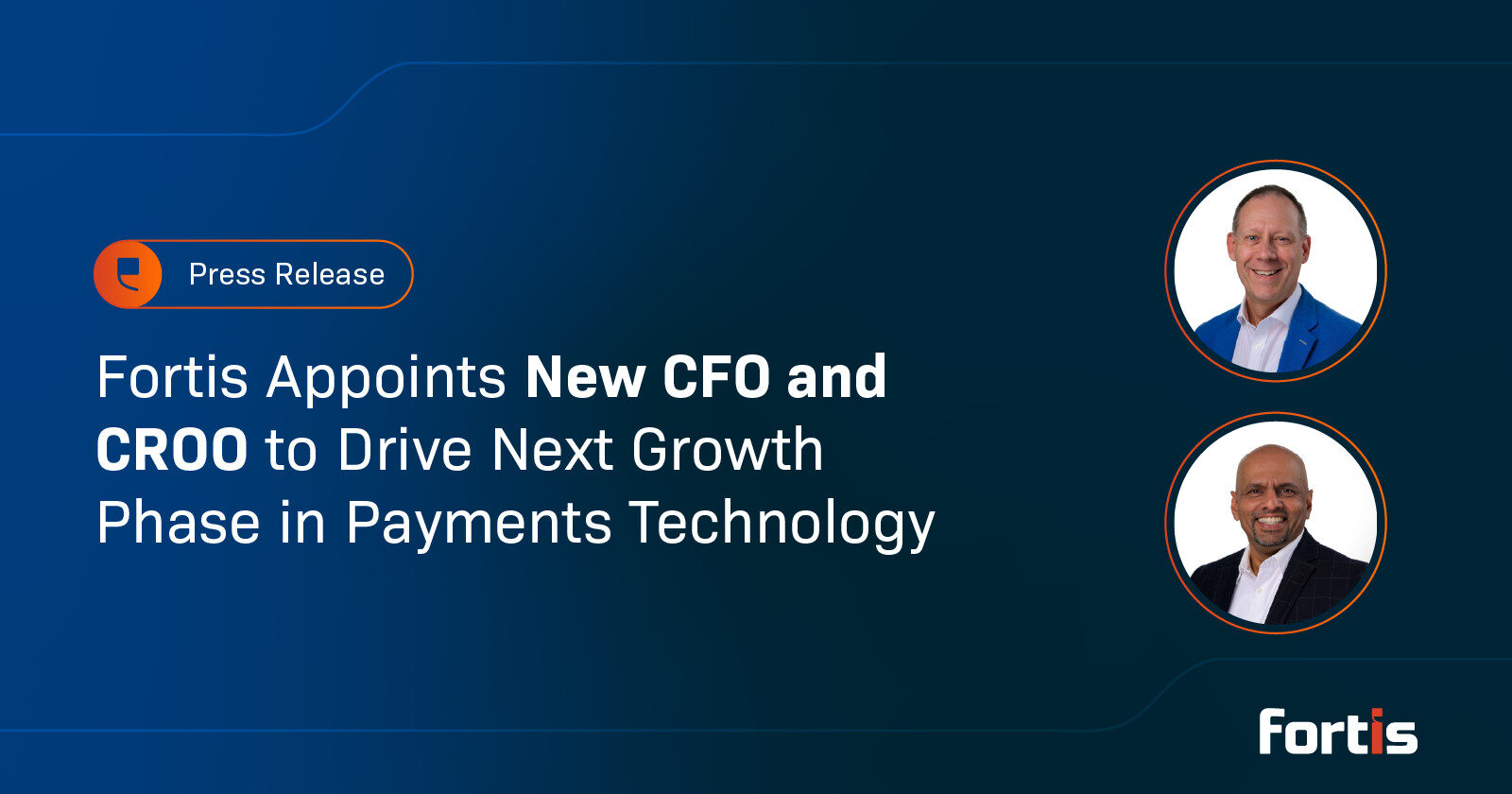
Fortis Appoints CFO and CROO to Drive Next Growth Phase in Payments Technology

PLANO, Texas, November 6, 2025 — Fortis, the payment technology leader for software platforms and scaling businesses, today announced the appointments of Brent Coles as Chief Financial Officer and Sharat Shankar as Chief Risk and Operations Officer. The strategic hires position Fortis to accelerate its embedded payments capabilities and deepen relationships across its software platform and enterprise resource planning (ERP) partner network. 

The expanded C-suite reflects Fortis’s commitment to scaling its payments infrastructure as demand grows for integrated financial solutions among software platforms and their business customers. 

“Brent and Sharat join Fortis at a crucial point in our company’s trajectory,” said Greg Cohen, CEO of Fortis. “As we scale to meet increasing market demand, their combined expertise in financial operations, risk management, and strategic partnerships will be critical to our success. Both leaders bring proven track records of driving growth and operational excellence in fast-moving fintech environments.” 

Brent Coles, Chief Financial Officer

Brent Coles brings more than 25 years of fintech and payments leadership to Fortis. He has held senior finance roles at leading payments companies including Onbe, Clearent, and BluePay, where he demonstrated expertise in scaling high-growth businesses, managing M&A transactions, and partnering with private equity sponsors to deliver measurable results. 

At Fortis, Coles will oversee all financial operations, including strategic planning, forecasting, and capital allocation. He will work closely with the executive team to strengthen financial discipline and support strategic growth initiatives across the company’s partner and ERP ecosystems.  

“I joined Fortis because of the significant opportunity ahead,” said Coles. “The company has built strong market positioning and assembled the right technology and team. My focus will be on building the financial infrastructure needed to scale efficiently while delivering value to our customers, partners, and stakeholders.” 

Sharat Shankar, Chief Risk and Operations Officer

Shankar brings deep payments, lending, and fintech expertise to Fortis. Most recently, he served as EVP of Risk at Corpay, a global business spend management platform. His background also includes senior leadership positions at established financial technology companies including Intuit and First Data. 

In his role at Fortis, Shankar will oversee the company’s operations and risk functions, with a focus on operational efficiency, regulatory compliance, and partner experience. His expertise will be instrumental as Fortis expands its embedded payments capabilities while maintaining best-in-class risk management practices. 

“The embedded payments space is evolving rapidly, and Fortis is uniquely positioned to lead that transformation,” said Shankar. “I’m excited to work with the team to deliver exceptional partner and customer experiences while enabling scalable growth.” 

About Fortis 

Fortis is the leader in embedded payments for software providers and ERP systems, processing billions annually through its proprietary technology. The company’s mission is to forge holistic commerce experiences that seamlessly integrate within software workflows—transforming payment processing from cost center to strategic advantage. With expertise in software platforms, Fortis moves commerce closer to invisible by strengthening the payments capabilities of software partners, guiding businesses to reach uncharted growth. Headquartered in Plano, Texas, Fortis is redefining the $100 trillion B2B payments landscape. Learn more at www.fortispay.com

Media Contact 
pr@fortispay.com 

The Hidden Cost of Fragmented AR Workflows: What Tech Leaders Should Know

Read Time: 6 minutes

TL;DR: Fragmented AR integrations cost users up to $1.3M annually in lost productivity. 59% of U.S. companies attribute poor cash flow to manual AR processes, while IT teams waste hours maintaining broken integrations. The solution? Native or deeply integrated AR automation delivers 80% faster processing, 70% cost savings, and 20% DSO reduction. Teams should prioritize certified integrations, audit current AR workflows, and eliminate the “invisible project” draining IT resources. 

The Invisible Project Draining Your Resources 

Every company has one: the “invisible project” that no one budgets for, but everyone works on. It’s not a product launch, new initiative or campaign—it’s simply keeping your accounts receivable functional. 

When invoices don’t sync to your ERP, AR data lags, or a connector fails, your tech teams quietly step in. They rebuild, export, reconcile, repeat, all to keep revenue flowing. 

But that invisible project isn’t free. It costs hours of manual work, delayed insights, and missed opportunities that could be spent on strategic growth.

The Cost of Disconnected Payments 

Disconnected payment and AR tools create hidden costs that add up quickly. In fact, 59% of U.S. businesses attribute poor cash flow and forecasting to outdated manual AR methods, while another 57% cite difficulties in managing credit risk (PYMNTS Intelligence, 2024). 

Manual AR processes drain productivity across the organization. According to recent research, half of businesses report excessive time wasted on AR processing, while 44% struggle with collecting delinquent payments (PYMNTS, 2024). Beyond operational challenges, companies face direct financial losses: studies suggest businesses can lose up to $1.3 million annually on inefficient processes (Formstack/Mantis Research, 2022). 

The time cost is staggering. Each hour spent reconciling data, managing logins, or manually re-keying information is time your team could be using to move the business forward.

The IT Bottleneck: When Your Tech Team Becomes a Manual Data Bridge 

When payment processors, billing platforms, and AR automation tools don’t integrate seamlessly someone has to fill the gap—usually your IT or Applications teams. Sometimes it falls to the Finance leader who knows the workflow best but doesn’t have bandwidth to manage yet another integration project. 

The result? Your tech team becomes a human middleware layer. They’re constantly building custom scripts, managing API connections, creating saved searches for data exports, or worse—manually entering payment data into their ERP because the integration broke again. 

According to the National Automated Clearing House Association, 71% of remittance information associated with electronic payments travels separately from the actual payment, forcing AR teams to manually match payments to invoices (Citizens Bank Corporate Finance Insights). This often means toggling between multiple systems, exporting data, and using spreadsheets to reconcile what should be automatic. 

Teams find themselves spending valuable time on: 

  • Re-creating APIs when third-party connectors fail 
  • Building and maintaining custom connectors for data transformations 
  • Manual cash application because payment data doesn’t map to invoices 
  • Creating workarounds when batch imports fail or take too long 
  • Troubleshooting why payment gateway data isn’t syncing to customer records 

This fragmentation doesn’t just slow operations—it damages team morale and retention. Accounts Receivable staff are especially vulnerable to defections: according to the Institute of Finance and Management, 27% say they plan to leave within the next year, and nearly half say they’ll leave within three years (IOFM, 2023).  

When talented developers and systems administrators spend their time on repetitive integration fixes instead of innovation, disengagement follows. Disengagement due to manual processes costs organizations $3,400 for every $10,000 in salary (OPEN.money, 2024).

The ROI of Integration 

The business case for AR automation is compelling. Companies that implement comprehensive automation solutions report significant benefits: 

  • Processing time reductions of up to 80% and cost cuts of 30-40% on manual processes (SNS Insider Market Research, 2024) 
  • Reduction in Days Sales Outstanding (DSO) by up to 20% (multiple industry sources) 
  • Invoicing cost savings exceeding 70% when transitioning to automation (HighRadius, 2024) 
  • 83% of AR executives report improved process efficiency and accuracy after implementing automation (PYMNTS Intelligence, 2024) 

The AR automation market is experiencing explosive growth, projected to increase from $3.2 billion in 2025 to $8.6 billion by 2035, with a compound annual growth rate of 10.3% (Future Market Insights, 2025). This growth reflects the urgent business need for integrated solutions.

From Fragmentation to Flow: Invisible Work Becomes Visible Impact 

The path forward requires more than just new software—it demands integrated systems that reduce manual handoffs and give teams real-time visibility into the entire order-to-cash cycle. 

Modern AR automation platforms offer: 

Seamless Integration 

  • Native connectors or prebuilt integrations that eliminate custom coding 
  • Real-time, bi-directional data sync between payment systems and your ERP 
  • Automatic cash application that posts directly to customer records and invoices 
  • No more CSV exports, batch uploads, or manual reconciliation 

AI-Powered Intelligence 

  • Predictive analytics for customer payment behavior based on your transaction history 
  • Automated credit risk scoring that updates customer credit limits 
  • Smart payment matching that handles partial payments, credits, and discrepancies 
  • Machine learning that improves accuracy over time 

Automated Collections That Scale 

  • Dunning workflows that trigger based on invoice aging 
  • Multi-channel payment reminders (email, SMS, portal) with embedded payment links 
  • Customer self-service portals that pull live data from your system 
  • Automated escalation paths based on customer payment history 

Real-Time Financial Visibility 

  • Dashboards that reflect current AR data without manual reporting 
  • Cash flow forecasting based on actual receivables and payment patterns 
  • Custom saved searches and KPI tracking integrated with your ERP analytics 
  • Role-based access that works with your existing permission structure 

For organizations still relying on manual processes, the window to act is narrowing. Invoice volumes are projected to increase by 46% over the next three years (PYMNTS Intelligence, 2024), which will only magnify existing inefficiencies.

Taking Action 

Tech leaders should: 

  1. Audit current AR processes to identify the most time-consuming and error-prone manual tasks 
  1. Calculate the true cost of fragmentation, including staff time, delayed payments, and opportunity costs 
  1. Prioritize integration capabilities when evaluating automation solutions—58% of enterprises consider integration a key factor in selecting financial automation software (IMARC Group, 2024) 
  1. Select scalable cloud-based solutions that can grow with your business and integrate with existing systems 
  1. Focus on change management with strong training and support to ensure successful adoption 

The invisible project of keeping AR functional doesn’t have to drain your organization’s resources. With the right integrated automation platform, tech teams can shift from firefighting disconnected systems to enabling strategic growth.

Sources 

Accelerate AR: Fast-Tracking Financial Performance with Fortis 

Post 1: Why It’s Time to Accelerate Your AR Workflow  
Read Time: 4 minutes

This post kicks off our Accelerate AR series—a four-part guide to transforming your invoice-to-cash process using embedded payments inside your ERP. 

First up: Why manual Accounts Receivable (AR) is slowing you down, and what to do about it. 

In a perfect world, invoicing would be instant, payments would post immediately, and reporting would offer a crystal-clear view of cash flow. But for many mid-market B2B companies, the reality is different: invoices get delayed, payments arrive late, and reporting feels more like guesswork than a decision-making tool.  

These inefficiencies often stem from outdated, fragmented processes. Despite investing in ERP systems to centralize operations, many companies still rely on spreadsheets and manual workarounds for AR tasks. If your team is switching between tools, manually entering invoice data, and chasing payments without clear visibility, your AR process is likely holding you back. 

The results can be painful:  

  • Payments trickling in well past due dates  
  • Hours lost each week to reconciliation and follow-up  
  • Limited insight into Days Sales Outstanding (DSO) and cash flow forecasts  
  • Mounting frustration across finance, sales, and customer service  

It’s a common reality, and it’s costly. Businesses in the Americas lose over 50% of unpaid receivables that aren’t settled within 90 days. On average, 4% of accounts receivable are written off entirely.
Source: Atradius & U.S. Census Bureau 

The Hidden Cost of Staying “Good Enough”  

Too often, AR workflows are seen as a back-office task—not a business growth opportunity. But in an environment where speed and accuracy matter more than ever, staying stuck in outdated processes puts your financial health at risk.  

Even incremental delays can cascade into:  

  • Missed revenue opportunities  
  • Cash flow shortfalls that impact budgeting or expansion  
  • Lower customer satisfaction due to billing confusion or payment friction  

It’s not just about operational efficiency—it’s about unlocking real financial performance. 

What If AR Could Move as Fast as Your Business?  

That’s where true transformation begins—not just faster workflows, but smarter, more connected ones that accelerate every step of your AR process. 

When you embed payments into your ERP environment, you create a single, frictionless AR system that works across your invoicing, payment collection, and reporting functions. You reduce touchpoints, minimize errors, and gain full control over your cash cycle.  

Imagine:  

  • Invoices sent the moment a sale closes  
  • Customers paying instantly using their preferred method  
  • Payments posting automatically to the correct account  
  • Finance having real-time visibility into every step  

This isn’t a future-state—it’s what embedded AR can deliver today.  

Why Now?  

Companies that haven’t modernized their AR systems are feeling it: longer collection cycles, higher operating costs, and a lack of data clarity to plan effectively. In contrast, businesses that integrate payments within their ERP are reclaiming time, reducing DSO, and scaling with less friction.  

Modernizing AR isn’t just a technology decision—it’s a growth strategy.  

Turning Strategy into Action 

Fragmented AR processes don’t just slow you down—they make it harder to plan, respond, and grow. When invoicing, payments, and reporting operate in silos, inefficiencies compound and visibility fades. 

But for companies using embedded payment solutions within their ERP, the story looks different. 

With a single, connected workflow, finance teams can streamline invoicing, enable easier payments, and monitor key AR metrics in real time—all without switching platforms or adding new tools to manage. 

That’s the power of embedded AR—and it’s what Fortis is built to support. 

Where to Go from Here  

Accelerating AR starts with recognizing the friction—and then replacing it with smart, embedded processes that work the way your business does. 

In this four-part series, we’ll explore how Fortis helps finance teams automate the full invoice-to-cash journey: 

  • In our next post, we’ll break down the hidden costs of manual invoicing—and how native ERP automation speeds up billing and reduces errors. 
  • Then we’ll look at the payment experience: what’s slowing it down and how to eliminate the barriers that frustrate customers and delay revenue. 
  • Finally, we’ll dive into AR reporting—and how real-time visibility transforms AR from a reactive function into a strategic growth driver. 

Each post will offer practical insights and examples to help you modernize your AR process—and set your team up to scale. 

Ready to uncover hidden inefficiencies in your AR process? Talk to a Fortis expert to see how embedded payments can streamline invoicing, reduce delays, and give your finance team time back.