
Eliminate AR friction & reduce DSO: Read the AR Accelerator

Visa’s Commercial Enhanced Data Program: Impact on B2B Payments

How Fortis partners help businesses lower interchange through clean, verified transaction data under Visa’s Commercial Enhanced Data Program (CEDP)

Why B2B Payment Costs Are Rising, and What’s Changing

Many businesses pay more than they should for credit card processing—not because of their payment provider, but because of missing or incomplete transaction data. When details like invoice numbers, tax amounts, or purchase order information aren’t captured and transmitted accurately, transactions default to higher interchange tiers and costs rise. 

Visa’s Commercial Enhanced Data Program (CEDP), active since October 2025, brings those inefficiencies into focus. For the first time, data accuracy directly determines interchange cost, creating a clear incentive for businesses to modernize how they capture, validate, and submit payment data.

For ERP providers, software platforms, and their customers, CEDP turns payment data quality into a measurable financial outcome.

What Is Visa’s Commercial Enhanced Data Program (CEDP)

Visa’s Commercial Enhanced Data Program (CEDP) is a framework that links interchange rates for U.S. B2B and small business card transactions to the completeness and accuracy of transaction data. Businesses that submit verified, enhanced data qualify for lower interchange rates, while transactions with missing or inaccurate data incur higher costs.

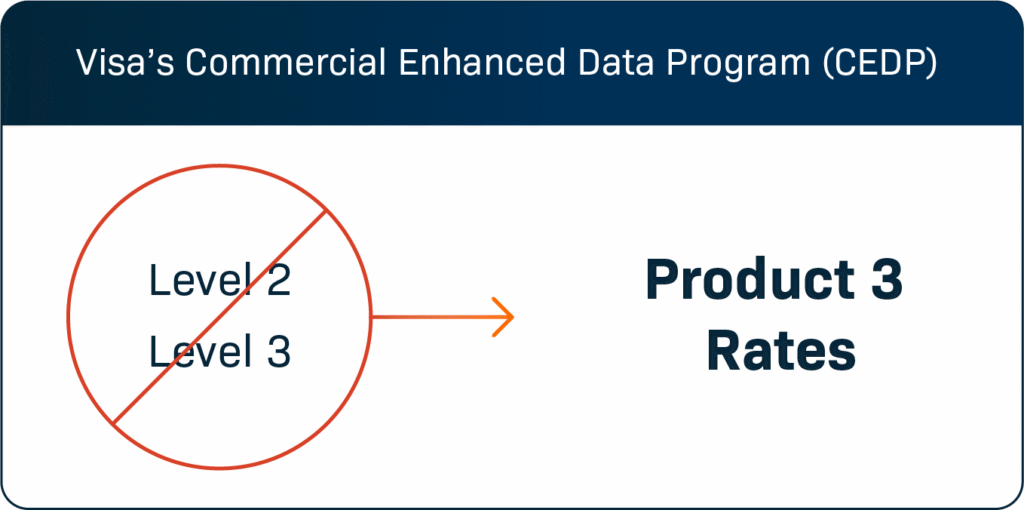
CEDP replaces the old Level 2 and Level 3 structure with a single, standardized validation model, making data quality a direct driver of payment economics.

CEDP Rewards Accuracy—and Exposes Data Gaps

Under CEDP, businesses that submit complete, validated transaction data are classified as verified and qualify for Visa’s Product 3 interchange rates.

  • Verified Product 3 transactions generally qualify in the 1.75%–2.05% range
  • Non-verified transactions typically range from 2.65%-2.95%
  • Even after Visa’s 0.05% participation fee, verified transactions can deliver a 7–10% reduction in interchange costs

Businesses that fail to meet verification requirements continue paying higher rates—while still incurring the participation fee, raising their effective processing costs. The implication is clear: enhanced data is no longer optional. It’s a cost-control requirement.

Why Visa CEDP Matters for B2B Organizations

Visa now validates qualifying transactions in real time, checking for data completeness and accuracy. Clean, consistent data unlocks better rates; gaps or inconsistencies increase costs.

  • Data quality becomes a financial strategy—not just a back-office task
  • Line-item detail, tax, duty, and freight accuracy directly affect interchange
  • Businesses that modernize benefit from lower costs; those that don’t face rising expense and competitive pressure

CEDP makes payment performance transparent—and actionable.

How Fortis Partners Create Immediate Value

ERP and software partners are uniquely positioned to help businesses adapt to CEDP. Through Fortis, partners can embed CEDP-ready payment experiences directly into the ERP systems their customers already use.

1. Built-in Alignment with CEDP Requirements

Fortis provides standardized data models, APIs, and reporting tools that support Visa’s validation standards. Partners can map required fields, enable accurate data capture, and reduce manual processes that introduce risk and cost.

2. Deep ERP and Commerce Integrations

Fortis integrates directly with platforms such as Acumatica, NetSuite, Sage, and Microsoft Dynamics 365 Business Central—so enhanced data is captured at the source.

These integrations help businesses:

  • Auto-populate line-item and tax data
  • Reduce validation errors that lead to disqualification
  • Maintain consistent verification without added operational burden

3. Real-Time Visibility into Interchange Qualification

Partners can give customers insight into which transactions qualify, which don’t, and why—turning data transparency into measurable cost savings.

What the Cost Savings Can Look Like

The difference between verified and non-verified commercial card transactions can be meaningful, particularly at scale.

Verified Product 3 transactions generally qualify in the 1.75%–2.05% interchange range, compared to 2.65%–2.95% for non-verified transactions. That difference reflects how Visa rewards complete, validated transaction data—not negotiated pricing.

For every $100,000 in B2B payment volume, that gap can translate into hundreds of dollars in potential savings. For manufacturers, distributors, and service providers processing large invoice values, the cumulative impact increases as volume grows.

Rather than a one-time adjustment, CEDP turns interchange optimization into an ongoing opportunity. As data quality improves and more transactions qualify as verified, businesses can continuously reduce unnecessary payment costs over time.

CEDP Is a Part of a Broader B2B Payments Modernization Trend

Beyond cost savings, CEDP reinforces a broader shift in B2B finance toward greater visibility, automation, and control. Finance and operations leaders are modernizing payment workflows to reduce reconciliation effort and improve data accuracy across systems.

Visa’s program rewards organizations that invest in clean, connected payment data, making enhanced data the new standard for operational efficiency.

The Fortis Advantage: A Platform Built for What’s Next

Fortis provides the infrastructure partners need to succeed under CEDP and beyond. With standardized data models, developer-friendly APIs, and real-time reporting, Fortis makes it easy to embed CEDP-ready payments into ERP and software platforms.

  • Capture enhanced data automatically
  • Reduce validation failures
  • Qualify for lower interchange rates
  • Improve long-term efficiency and financial control

As CEDP adoption accelerates, early movers will realize measurable savings first. Fortis partners are positioned to bridge the gap between transaction data and payment performance—delivering accuracy, transparency, and confidence at scale.

The Bottom Line

Visa CEDP changes how B2B payment costs are determined, shifting the focus from card type to data quality. Businesses that adapt early can reduce interchange, improve visibility, and strengthen financial control.

With Fortis, partners can help customers meet today’s requirements while building a more efficient, future-ready payments foundation.

Let’s start the conversation about how Visa CEDP fits into your broader payment strategy.

Digital Wallets and the Shift in Payment Expectations Heading Into 2026

Why Modern Payment Experiences Are Now Critical to Customer Retention

As organizations look ahead to 2026, one reality is already clear: customer expectations around payments have permanently changed. What once felt like a competitive differentiator—fast, flexible, digital payment options—has become the baseline. 

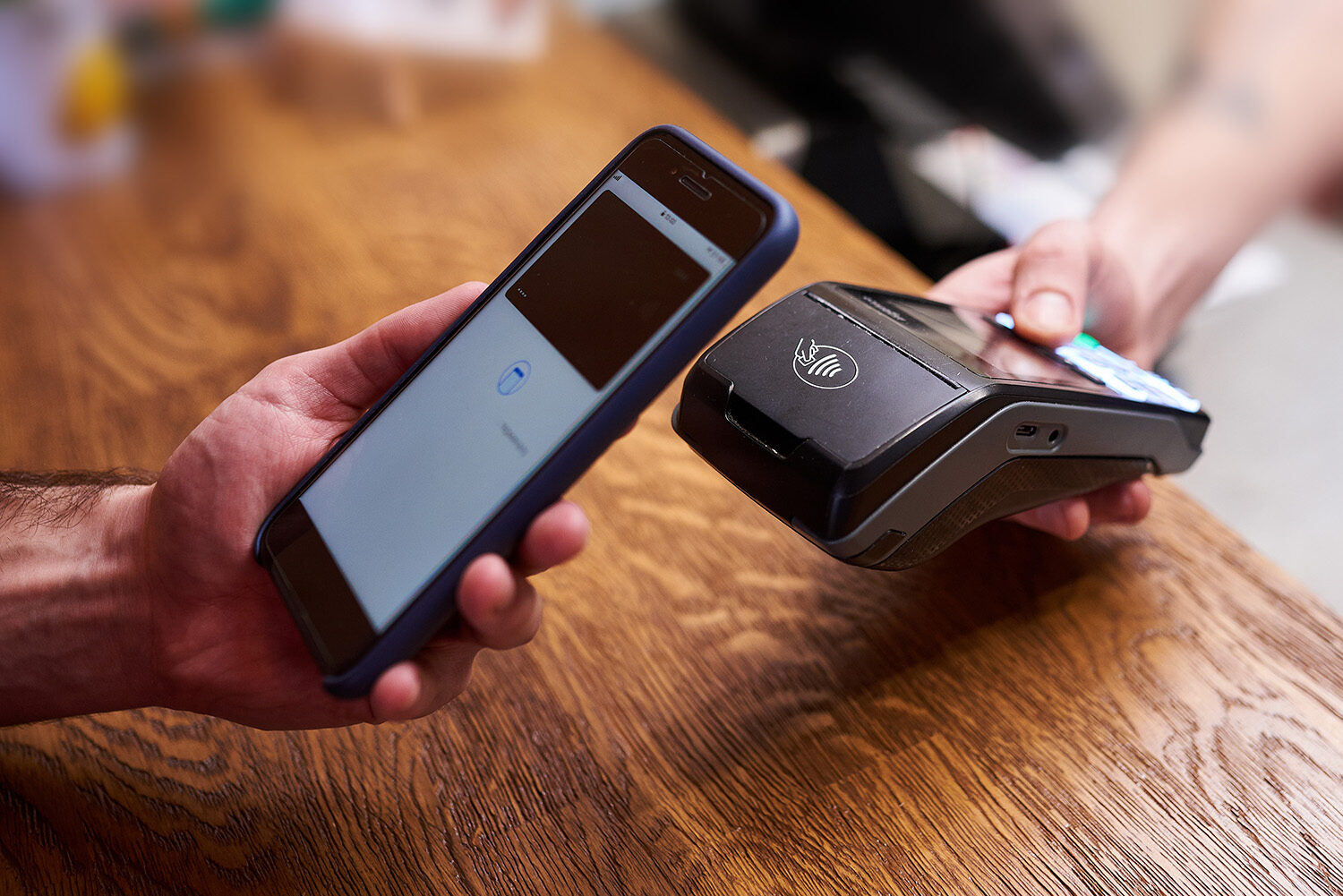
Digital wallets such as Apple Pay, Google Pay, PayPal, and Venmo are no longer viewed as emerging capabilities or optional enhancements. They reflect how customers expect digital experiences to work. When those expectations aren’t met, friction shows up quickly—and over time, that friction impacts trust, satisfaction, and retention.

For businesses, software platforms, and ISVs, the strategic implication isn’t about unlocking incremental payment revenue.  It’s about protecting customer relationships by removing moments of friction that quietly erode loyalty. 

Digital Wallet Adoption Reflects Changing Expectations 

Digital wallet adoption continues to accelerate globally, but the real signal isn’t adoption alone. It’s what that adoption says about customer tolerance for friction.  

According to Capital One Shopping, over 4.3 billion people worldwide used digital wallets in 2024, with usage projected to reach 5.8 billion by 2029.  In the U.S., more than half of adults already rely on digital wallets—not because they’re novel, but because they’re faster, simpler, and feel more secure. 

Wallets succeed because they remove effort from the transaction. Biometric authentication, tokenization, and stored credentials allow payments to happen quickly and confidently, without forcing customers to think about the mechanics behind them. 

Payment Expectations Are Retention Expectations 

Digital wallets now account for 53% of global online purchases and 32% of in-store transactions, according to Capital One Shopping. But the more telling insight is behavioral, not transactional: 51% of digital wallet users have stopped shopping with a business that only accepted traditional payment methods. 

This isn’t about preference. It’s about patience—or the lack of it. When payment experiences feel outdated or inconvenient, customers don’t just notice. They interpret that friction as a signal about the organization itself. 

Over time, those signals compound—and churn follows. The payment experience has become one of the most visible drivers of customer retention. 

Why This Shift Matters for Platforms and ISVs 

For software platforms and ISVs, payment experience is inseparable from product experience. As payments become embedded into workflows, any friction at the point of payment reflects back on the platform delivering it. 

Digital wallets are increasingly used for: 

  • Embedded payments within vertical SaaS platforms 
  • Subscription-based B2B purchases and renewals 
  • Mobile invoicing and field-service interactions 
  • Corporate and virtual card transactions 

In these environments, even minor points of friction can trigger outsized consequences—support tickets, delayed payments, abandoned transactions, or strained customer relationships. 

Each issue may seem small in isolation. Together, they erode long-term loyalty. 

The Convergence of eCommerce and B2B Expectations 

Another critical shift heading into 2026 is the convergence of consumer and business payment expectations.  

Today’s business buyers are also consumers—and they increasingly expect the same speed, flexibility, and familiarity in professional transactions that they experience personally. As B2B interactions move toward self-serve, digital-first models, tolerance for rigid or manual payment processes continues to shrink. Digital wallets sit at the center of this convergence. They offer a consistent experience across personal and professional contexts, reinforcing a simple truth: ease is no longer channel-specific. 

For organizations focused on retention, consistency across experiences matters.  Friction in one channel doesn’t stay isolated—it influences how customers perceive the entire relationship. 

Digital Wallets as Signals of Experience Maturity 

Digital wallets are evolving beyond simple card storage. Many now support additional payment rails and use cases. But the strategic insight isn’t about feature breadth—it’s about adaptability. 

Wallet support signals whether an organization’s payment infrastructure is built to: 

  • Reduce effort rather than introduce steps
  • Integrate seamlessly into broader digital journeys 
  • Adapt as customer expectations evolve 

Organizations that lack this flexibility may not lose customers overnight. But over time, misaligned experiences quietly increase dissatisfaction—and attrition becomes inevitable. 

Why Fortis Thinks About Payments Differently 

At Fortis, we see payment experience as a critical extension of the customer relationship—not just a transaction layer. As expectations continue to rise, modern payment strategies must be designed to reduce friction, reinforce trust, and scale alongside customer growth. 

That’s why we focus on helping platforms, ISVs, and businesses align payment experiences with how customers actually want to interact—today and in the future. When payments work the way users expect, they strengthen retention instead of putting it at risk.  

The Bottom Line: Retention Follows Experience 

Retention is no longer driven by individual transactions—it’s shaped by cumulative experience. Payment flows that feel slow, manual, or disconnected from the rest of the journey quietly undermine trust. 

Heading into 2026, the organizations that win on retention will be the ones that remove friction wherever it appears—especially at the point of payment. When payment experiences work the way customers expect, they fade into the background. 

And that’s exactly where they belong.

Let’s start the conversation about how payment experience impacts customer retention. 

Is Your Practice Leveraging Every Fortis Feature—or Leaving Efficiency on the Table?

Collect Payments Upfront with Web Payments

With Web Payments, your practice can collect payments at the same time new or existing patients book their appointments online. This reduces no-shows, increases commitment, and streamlines the experience for both your team and your patients. 

Customizable, secure payment forms make it easy to: 

  • Secure bookings upfront and reduce no-shows. 
  • Save team time with automated payment processing. 
  • Provide a modern, intuitive experience that reflects your standard of care. 

Whether it’s a workshop, community screening, or promotional event, upfront collection ensures you capture revenue while patients commit to their wellness.

Accept Payments Anywhere with the Fortis Mobile App

Did you know Fortis offers a mobile app available in the iOS and Android app stores? With it, your practice can process payments directly through Fortis—no extra systems required, and it’s already integrated. 

At a screening, workshop, or offsite event, the mobile app gives you convenient access to your payment platform—eliminating reconciliation headaches by keeping everything in one system. 

With the mobile app, you can: 

  • Accept credit card payments instantly at any event. 
  • Keep all transactions in one platform—no need for third-party apps like Square. 
  • Maintain full compliance and Fortis-grade security. 

It’s even better when you use both of them! By leveraging Web Payments and the Mobile App together, your practice can: 

  • Capture more revenue upfront and reduce no-shows. 
  • Eliminate the hassle of juggling multiple payment systems. 
  • Deliver a seamless, modern payment experience across every touchpoint. 

Fortis’ built-in payment features will not only strengthen those efforts but also simplify your team’s workload and improve the patient experience.  

👉 Have questions about Web Payments or the Fortis Mobile App? Reach out to our team anytime. We’ve also included a flyer you can bookmark or print to keep handy. We’re always here to help!

Share Fortis and Win.

Do you know another chiropractor who could benefit from Fortis’ powerful payment solutions? Send them our way and you could win a $200 Visa Gift Card!

Every eligible chiropractic practice you refer earns you one entry into our quarterly drawing– One lucky winner is drawn each quarter for a $200 Visa Gift Card. Referrals must be valid chiropractic practices not currently using Fortis. No purchase necessary. Terms and conditions apply. 

Know Your Numbers: Are You Collecting Enough to Cover Overhead?

Running a practice isn’t only about delivering excellent patient care—it’s also about making sure your practice remains financially healthy.  Overhead costs—both fixed and variable—such as rent, payroll, software, utilities, supplies, and fees remain constant, no matter how many patients walk through your door. 

That’s why knowing your numbers is critical. It helps you spot potential shortfalls before they become costly, reduce stress, and ensure you have the resources to grow, reinvest, or simply sustain your practice for long-term success.

Track multiple sources of revenue with ease  

Many practices struggle to keep a clear view of collections because revenue comes from so many different areas—intensive vs. maintenance care, supplements, exercise therapy equipment, massage services, screenings, workshops, events, and more. Without a way to monitor these revenue streams, it’s hard to know if you’re covering your true overhead, and can often lead to:  

  • Uncollected patient balances due to no-shows or declined payments.  
  • Missed opportunities to collect upfront for events or services.  
  • Reconciliation headaches that make it difficult to see real cash flow.

A key to financial health is to leverage technology to stay ahead and increase collections 

Once you’ve identified your fixed monthly expenses and budgeted for variables, technology is truly your BFF for tracking collections and ensuring revenue consistently exceeds overhead. 

A key tool within your payment’s platform is customized reporting. This will provide you clarity and control: 

  • View total collections: Track daily, weekly, and monthly revenue for recurring and one-time payments. 
  • Reconcile in real time: Auto-sync payments to the patient ledger reducing manual day-to-day reconciliation 
  • Automate failed payment follow-up: Let patients update their card on file and pay without staff intervention.
  • Break down your revenue by category: See where money is coming from—or falling short (e.g., wellness plans vs. intensive care, supplements, events). 
  • Export reports easily for internal review or accounting to get an accurate financial snapshot. 

With customized reporting, you streamline reconciliation, reduce human error, and gain actionable insights. 

Stress less, grow more, and focus on patient care with Fortis.  

We help you do more than collect payments—we help you run smarter. Maximize these features and count on our support every step of the way. 

Share Fortis and Win.

Do you know another chiropractor who could benefit from Fortis’ powerful payment solutions? Send them our way and you could win a $200 Visa Gift Card!

Every eligible chiropractic practice you refer earns you one entry into our quarterly drawing– One lucky winner is drawn each quarter for a $200 Visa Gift Card. Referrals must be valid chiropractic practices not currently using Fortis. No purchase necessary. Terms and conditions apply. 

Intelligent Flow: How Agentic AI Will Transform the Future of Payments

Why Intelligent, Connected Systems Will Redefine How Businesses Move Money

Businesses lose time and revenue every day to one simple truth: payments don’t think.

Automation can move money faster, but it can’t see around corners. Agentic AI can. It doesn’t just follow instructions—it learns from context, recognizes patterns, and recommends smarter actions in real time.

Consider this: A key customer’s payment is delayed by 48 hours. Automation sends a reminder. Agentic AI recognizes the customer’s payment history, notes their recent order increase, cross-references industry trends, and proactively suggests extending terms or reaching out with a strategic check-in.

That’s not just automation. That’s intelligence in motion—and it’s redefining how businesses move money.

From Automation to Intelligence

Automation changed payments for the better. It removed manual steps, reduced errors, and improved consistency. But automation can only do what it’s told. It follows instructions instead of understanding them.

Agentic AI goes further. It understands context, learns from patterns, and acts autonomously in real time. Instead of waiting for problems to appear, it anticipates them, and acts.

Imagine a system that identifies when liquidity is tightening and adjusts disbursements automatically, or reconciles an invoice based on patterns it’s learned from past behavior.   This is the shift from efficiency to intelligence—where payments stop being a process to manage and start becoming a strategic advantage.

Why It Matters: Turning Data into Strategy

Every transaction creates data—but most businesses can’t access or apply it fast enough to drive decisions. Agentic AI changes that, turning payment activity into real-time business intelligence.

AI-driven systems can detect trends in cash flow, identify anomalies, and recommend next steps before problems arise.  They don’t just report what happened—they show what’s coming next, helping finance leaders move from reaction to readiness.

For example: Instead of simply noting a slowdown in payments, an intelligent system might forecast, “You’ll need an additional $2M in working capital by Q2 based on current trends.” It could also alert your team that a key customer’s order volume is dropping and suggest a proactive outreach before revenue impact hits.

The result is faster decisions, fewer surprises, and stronger financial control—because when payments become predictive, strategy follows.

The Technology: APIs as the Arteries of Intelligent Commerce

The modern economy runs on APIs. They connect systems, partners, and platforms, allowing payments to flow securely across environments. As AI becomes more integrated into operations, those APIs are evolving from static connectors into intelligent channels that carry context, not just data.

Emerging technologies like the Model Context Protocol (MCP) are already making this possible. They allow AI agents to securely interact with software environments, verify data, and execute actions automatically, all while maintaining full transparency and auditability.

At Fortis, we’ve seen how embedding payments within core systems like NetSuite, Acumatica, Sage, and other leading ERPs can transform the experience for businesses. When payments are part of the workflow, they no longer feel separate from operations—they become an extension of the business itself.

Agentic AI will take this even further, enabling systems that dynamically route transactions, forecast liquidity, and reconcile exceptions without human intervention. When payments flow intelligently, friction disappears and growth accelerates.

The Foundation: Trust and Data Integrity

 As innovation accelerates, one question remains constant: Can I trust it?

Data security and integrity are non-negotiable in payments. According to Deloitte’s Global Future of Cyber Survey 2023, 77% of executives cite data protection as their top concern when adopting new technologies.

Trust must evolve alongside intelligence. Agentic systems can only make good decisions when they’re built on verified, reliable data—and that’s where the next major shift is already happening.

Visa’s CEDP: A New Standard for Data Integrity

 On October 17, 2025, Visa’s Commercial Enhanced Data Program (CEDP) began requiring businesses that process commercial card transactions to submit accurate, complete, and validated data—including SKU-level detail, tax, freight, and PO information—to qualify for the best interchange rates.

Visa’s move rewards accuracy and transparency. Clean, verified data now directly improves financial outcomes.

That’s a powerful sign of what’s next. Agentic systems depend on the same principles—complete, contextual data that enables confident, compliant action.

At Fortis, we see this as a blueprint for readiness. Businesses that invest in strong data foundations today will lead in tomorrow’s era of intelligent, autonomous payments.

How to Prepare for the Intelligent Payment Future

Intelligent payment flow won’t happen overnight, but forward-thinking leaders can start laying the groundwork today.

  • Strengthen your data foundation.
    Ensure your systems capture complete and accurate transaction details. AI is only as good as the information it learns from.
  • Evolve your integrations.
    Move from one-way APIs to real-time, event-driven architectures that enable contextual updates and intelligent decision-making.
  • Automation should never feel like a black box. Every action must remain transparent, auditable, and explainable.
  • Adopt secure access models.
    Implement least-privilege access and modern authentication frameworks to protect sensitive data as you scale.
  • Choose future-ready partners.
    Work with providers who view innovation, integration, and security as interconnected—not competing priorities.

Each of these steps helps create a more intelligent, frictionless flow of funds and information—the foundation of every great business relationship.

People at the Center of the Flow

 It’s easy to view AI as replacing people, but in reality, it’s empowering them.

When routine reconciliation or settlement tasks happen automatically, teams gain time for strategy, insight, and customer experience.

At Fortis, we see intelligent flow as a partnership between people and technology—one that gives businesses back their time, confidence, and creative edge.

The Bottom Line

 Agentic AI represents the next phase in the evolution of payments—one where transactions don’t just happen; they think.

The businesses preparing today—investing in clean data, modern APIs, and trusted integrations—will lead tomorrow. Because the future of payments isn’t about adding more tools. It’s about creating flow without friction.

Where Fortis Fits In

Fortis helps businesses and software partners create connected, secure payment experiences that build trust and accelerate growth. We may not offer an AI solution today, but we’re building the intelligent infrastructure that will make Agentic AI possible: adaptable, fast, and deeply integrated into the systems businesses rely on every day.

  • For ERP users: Fortis integrates seamlessly with leading ERP systems—including NetSuite, Sage, and Acumatica—reducing reconciliation time and creating the clean structured data that fuels AI-driven insights across finance, operations, and customer systems.
  • For software platforms: Our embedded payment technology helps differentiate your offering—delivering a smoother, more intelligent payment experience your customers will trust and unlocks future AI capabilities
  • For finance leaders: Real-time insights and unified data access help you move from reactive to strategic decision-making, laying the groundwork for future-ready automation and predictive intelligence.

Let’s start the conversation about what frictionless payment flow could mean for your business.