
Enjoying the Fortis experience? Leave a review on Trustpilot!

Visa’s Commercial Enhanced Data Program: Impact on B2B Payments

How Fortis partners help businesses lower interchange through clean, verified transaction data under Visa’s Commercial Enhanced Data Program (CEDP)

Why B2B Payment Costs Are Rising, and What’s Changing

Many businesses pay more than they should for credit card processing—not because of their payment provider, but because of missing or incomplete transaction data. When details like invoice numbers, tax amounts, or purchase order information aren’t captured and transmitted accurately, transactions default to higher interchange tiers and costs rise. 

Visa’s Commercial Enhanced Data Program (CEDP), active since October 2025, brings those inefficiencies into focus. For the first time, data accuracy directly determines interchange cost, creating a clear incentive for businesses to modernize how they capture, validate, and submit payment data.

For ERP providers, software platforms, and their customers, CEDP turns payment data quality into a measurable financial outcome.

What Is Visa’s Commercial Enhanced Data Program (CEDP)

Visa’s Commercial Enhanced Data Program (CEDP) is a framework that links interchange rates for U.S. B2B and small business card transactions to the completeness and accuracy of transaction data. Businesses that submit verified, enhanced data qualify for lower interchange rates, while transactions with missing or inaccurate data incur higher costs.

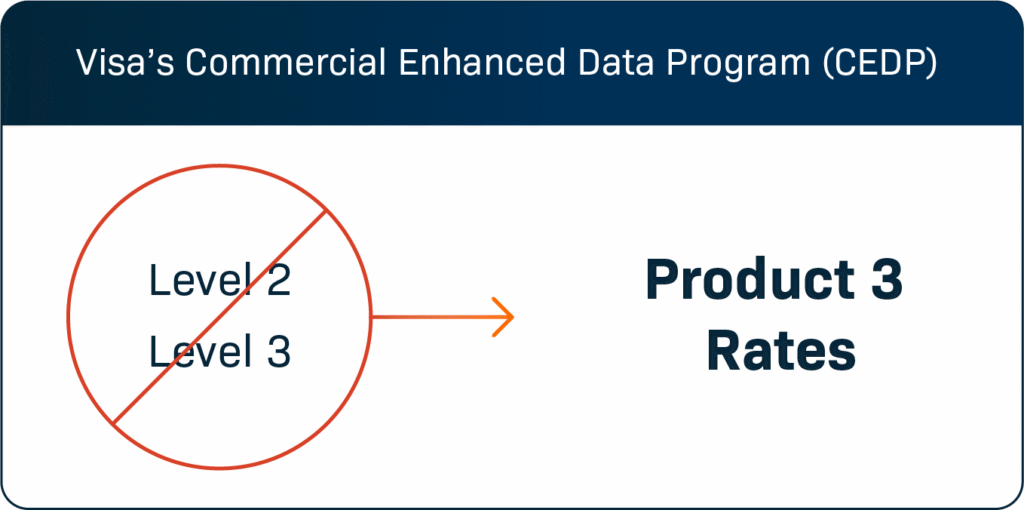
CEDP replaces the old Level 2 and Level 3 structure with a single, standardized validation model, making data quality a direct driver of payment economics.
CEDP Rewards Accuracy—and Exposes Data Gaps

Under CEDP, businesses that submit complete, validated transaction data are classified as verified and qualify for Visa’s Product 3 interchange rates.

  • Verified Product 3 transactions generally qualify in the 1.75%–2.05% range
  • Non-verified transactions typically range from 2.65%-2.95%
  • Even after Visa’s 0.05% participation fee, verified transactions can deliver a 7–10% reduction in interchange costs

Businesses that fail to meet verification requirements continue paying higher rates—while still incurring the participation fee, raising their effective processing costs. The implication is clear: enhanced data is no longer optional. It’s a cost-control requirement.

Why Visa CEDP Matters for B2B Organizations

Visa now validates qualifying transactions in real time, checking for data completeness and accuracy. Clean, consistent data unlocks better rates; gaps or inconsistencies increase costs.

  • Data quality becomes a financial strategy—not just a back-office task
  • Line-item detail, tax, duty, and freight accuracy directly affect interchange
  • Businesses that modernize benefit from lower costs; those that don’t face rising expense and competitive pressure

CEDP makes payment performance transparent—and actionable.

How Fortis Partners Create Immediate Value

ERP and software partners are uniquely positioned to help businesses adapt to CEDP. Through Fortis, partners can embed CEDP-ready payment experiences directly into the ERP systems their customers already use.

1. Built-in Alignment with CEDP Requirements

Fortis provides standardized data models, APIs, and reporting tools that support Visa’s validation standards. Partners can map required fields, enable accurate data capture, and reduce manual processes that introduce risk and cost.

2. Deep ERP and Commerce Integrations

Fortis integrates directly with platforms such as Acumatica, NetSuite, Sage, and Microsoft Dynamics 365 Business Central—so enhanced data is captured at the source.

These integrations help businesses:

  • Auto-populate line-item and tax data
  • Reduce validation errors that lead to disqualification
  • Maintain consistent verification without added operational burden

3. Real-Time Visibility into Interchange Qualification

Partners can give customers insight into which transactions qualify, which don’t, and why—turning data transparency into measurable cost savings.

What the Cost Savings Can Look Like

The difference between verified and non-verified commercial card transactions can be meaningful, particularly at scale.

Verified Product 3 transactions generally qualify in the 1.75%–2.05% interchange range, compared to 2.65%–2.95% for non-verified transactions. That difference reflects how Visa rewards complete, validated transaction data—not negotiated pricing.

For every $100,000 in B2B payment volume, that gap can translate into hundreds of dollars in potential savings. For manufacturers, distributors, and service providers processing large invoice values, the cumulative impact increases as volume grows.

Rather than a one-time adjustment, CEDP turns interchange optimization into an ongoing opportunity. As data quality improves and more transactions qualify as verified, businesses can continuously reduce unnecessary payment costs over time.

CEDP Is a Part of a Broader B2B Payments Modernization Trend

Beyond cost savings, CEDP reinforces a broader shift in B2B finance toward greater visibility, automation, and control. Finance and operations leaders are modernizing payment workflows to reduce reconciliation effort and improve data accuracy across systems.

Visa’s program rewards organizations that invest in clean, connected payment data, making enhanced data the new standard for operational efficiency.

The Fortis Advantage: A Platform Built for What’s Next

Fortis provides the infrastructure partners need to succeed under CEDP and beyond. With standardized data models, developer-friendly APIs, and real-time reporting, Fortis makes it easy to embed CEDP-ready payments into ERP and software platforms.

  • Capture enhanced data automatically
  • Reduce validation failures
  • Qualify for lower interchange rates
  • Improve long-term efficiency and financial control

As CEDP adoption accelerates, early movers will realize measurable savings first. Fortis partners are positioned to bridge the gap between transaction data and payment performance—delivering accuracy, transparency, and confidence at scale.

The Bottom Line

Visa CEDP changes how B2B payment costs are determined, shifting the focus from card type to data quality. Businesses that adapt early can reduce interchange, improve visibility, and strengthen financial control.

With Fortis, partners can help customers meet today’s requirements while building a more efficient, future-ready payments foundation.

Let’s start the conversation about how Visa CEDP fits into your broader payment strategy.
Digital Wallets and the Shift in Payment Expectations Heading Into 2026

Why Modern Payment Experiences Are Now Critical to Customer Retention

As organizations look ahead to 2026, one reality is already clear: customer expectations around payments have permanently changed. What once felt like a competitive differentiator—fast, flexible, digital payment options—has become the baseline. 

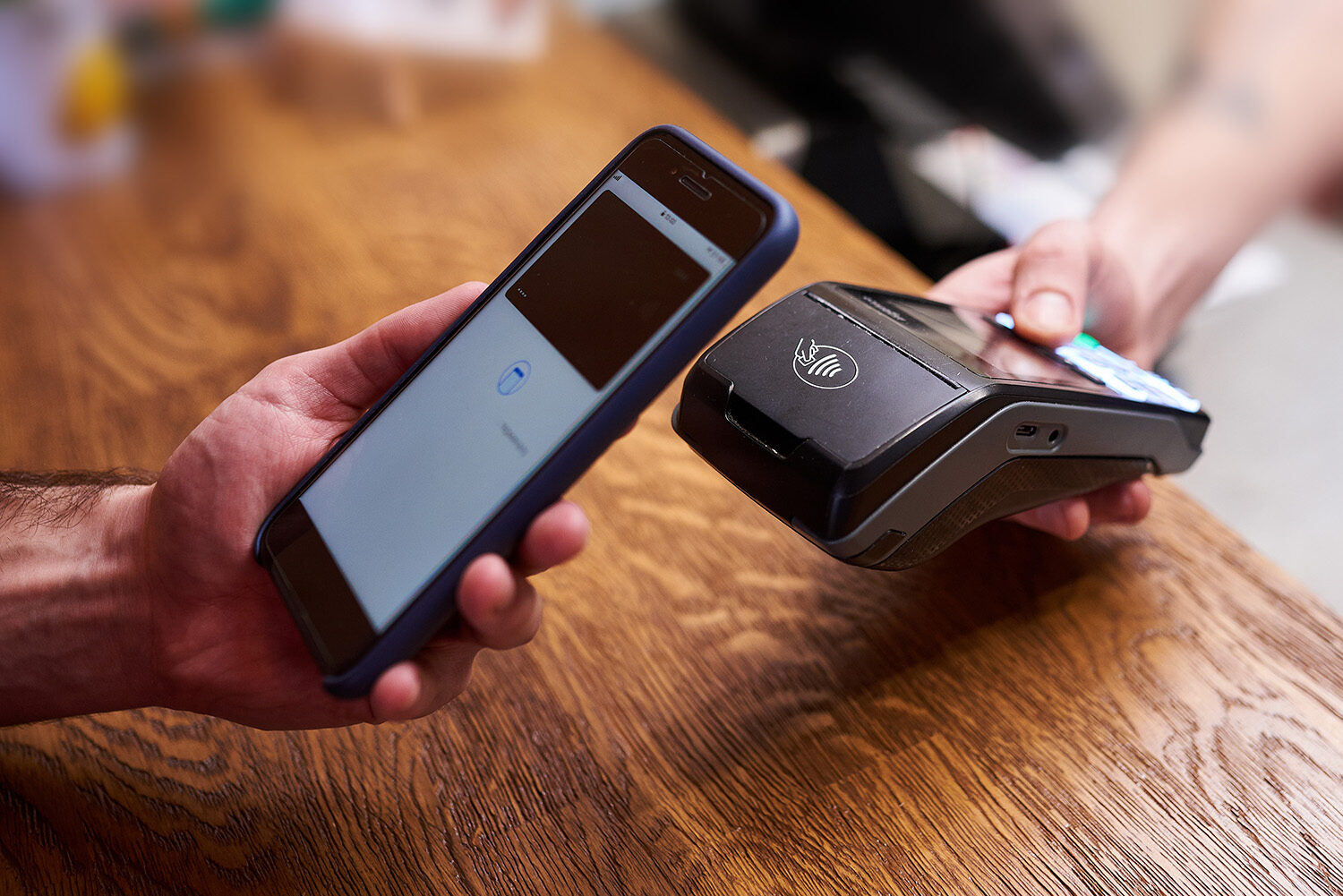
Digital wallets such as Apple Pay, Google Pay, PayPal, and Venmo are no longer viewed as emerging capabilities or optional enhancements. They reflect how customers expect digital experiences to work. When those expectations aren’t met, friction shows up quickly—and over time, that friction impacts trust, satisfaction, and retention.

For businesses, software platforms, and ISVs, the strategic implication isn’t about unlocking incremental payment revenue.  It’s about protecting customer relationships by removing moments of friction that quietly erode loyalty. 

Digital Wallet Adoption Reflects Changing Expectations 

Digital wallet adoption continues to accelerate globally, but the real signal isn’t adoption alone. It’s what that adoption says about customer tolerance for friction.  

According to Capital One Shopping, over 4.3 billion people worldwide used digital wallets in 2024, with usage projected to reach 5.8 billion by 2029.  In the U.S., more than half of adults already rely on digital wallets—not because they’re novel, but because they’re faster, simpler, and feel more secure. 

Wallets succeed because they remove effort from the transaction. Biometric authentication, tokenization, and stored credentials allow payments to happen quickly and confidently, without forcing customers to think about the mechanics behind them. 

Payment Expectations Are Retention Expectations 

Digital wallets now account for 53% of global online purchases and 32% of in-store transactions, according to Capital One Shopping. But the more telling insight is behavioral, not transactional: 51% of digital wallet users have stopped shopping with a business that only accepted traditional payment methods. 

This isn’t about preference. It’s about patience—or the lack of it. When payment experiences feel outdated or inconvenient, customers don’t just notice. They interpret that friction as a signal about the organization itself. 

Over time, those signals compound—and churn follows. The payment experience has become one of the most visible drivers of customer retention. 

Why This Shift Matters for Platforms and ISVs 

For software platforms and ISVs, payment experience is inseparable from product experience. As payments become embedded into workflows, any friction at the point of payment reflects back on the platform delivering it. 

Digital wallets are increasingly used for: 

  • Embedded payments within vertical SaaS platforms 
  • Subscription-based B2B purchases and renewals 
  • Mobile invoicing and field-service interactions 
  • Corporate and virtual card transactions 

In these environments, even minor points of friction can trigger outsized consequences—support tickets, delayed payments, abandoned transactions, or strained customer relationships. 

Each issue may seem small in isolation. Together, they erode long-term loyalty. 

The Convergence of eCommerce and B2B Expectations 

Another critical shift heading into 2026 is the convergence of consumer and business payment expectations.  

Today’s business buyers are also consumers—and they increasingly expect the same speed, flexibility, and familiarity in professional transactions that they experience personally. As B2B interactions move toward self-serve, digital-first models, tolerance for rigid or manual payment processes continues to shrink. Digital wallets sit at the center of this convergence. They offer a consistent experience across personal and professional contexts, reinforcing a simple truth: ease is no longer channel-specific. 

For organizations focused on retention, consistency across experiences matters.  Friction in one channel doesn’t stay isolated—it influences how customers perceive the entire relationship. 

Digital Wallets as Signals of Experience Maturity 

Digital wallets are evolving beyond simple card storage. Many now support additional payment rails and use cases. But the strategic insight isn’t about feature breadth—it’s about adaptability. 

Wallet support signals whether an organization’s payment infrastructure is built to: 

  • Reduce effort rather than introduce steps
  • Integrate seamlessly into broader digital journeys 
  • Adapt as customer expectations evolve 

Organizations that lack this flexibility may not lose customers overnight. But over time, misaligned experiences quietly increase dissatisfaction—and attrition becomes inevitable. 

Why Fortis Thinks About Payments Differently 

At Fortis, we see payment experience as a critical extension of the customer relationship—not just a transaction layer. As expectations continue to rise, modern payment strategies must be designed to reduce friction, reinforce trust, and scale alongside customer growth. 

That’s why we focus on helping platforms, ISVs, and businesses align payment experiences with how customers actually want to interact—today and in the future. When payments work the way users expect, they strengthen retention instead of putting it at risk.  

The Bottom Line: Retention Follows Experience 

Retention is no longer driven by individual transactions—it’s shaped by cumulative experience. Payment flows that feel slow, manual, or disconnected from the rest of the journey quietly undermine trust. 

Heading into 2026, the organizations that win on retention will be the ones that remove friction wherever it appears—especially at the point of payment. When payment experiences work the way customers expect, they fade into the background. 

And that’s exactly where they belong.

Let’s start the conversation about how payment experience impacts customer retention. 

Making Every Checkout Count: Preparing for eCommerce Peak Season

Read time: 3 minutes

Every year, the fourth quarter brings both excitement and anxiety for eCommerce businesses. Orders surge, expectations rise, and the margin for error narrows.

Inventory must stay ahead of demand, customer service teams are stretched thin, and checkout experiences are pushed to the limit. Yet amid all the moving parts, one truth remains constant: the path to conversion can be won or lost in just a few clicks.

Before rushing to optimize or overhaul checkout systems, it’s worth asking a simple question—what’s actually driving customers to abandon their carts?

Is it slow page speed? Confusing payment options? A checkout flow that feels disconnected from the rest of the brand experience? Identifying those friction points is the first step toward building a checkout that not only works under pressure but earns trust.

Understanding the Real Challenge

Peak season success isn’t just about handling higher volume—it’s about delivering consistent, seamless experiences when predictability is scarce.

Shoppers and buyers alike expect fast, secure, and frictionless experiences. For B2C, that means mobile-optimized checkouts and trusted wallet options. For B2B, it means flexibility—the ability to process invoices, large orders, and store payment methods while keeping transactions simple and secure.

Both audiences want one thing: to complete their purchase without barriers.

That’s where embedded payments come in.

How Embedded Payments Simplify the Experience

When payments are fully embedded within your eCommerce platform, you remove a major source of friction. Customers stay within your environment, see your branding throughout the process, and complete their purchase without being redirected elsewhere.

With Fortis embedded payments, businesses running on WooCommerce, Adobe Commerce, or BigCommerce can unify their payment experience across channels—online and in-store—while maintaining reliability, speed, and security.

For B2B sellers, Fortis supports complex purchase flows such as quote-to-cash and recurring billing without interrupting the buying journey. For B2C retailers, that same embedded foundation ensures fast, familiar transactions—even at peak traffic.

For partners and integrators, it means faster implementation, stronger customer retention, and scalable growth across every industry vertical.

Partnering for Growth, Not Just Transactions

Behind every Fortis integration is a partnership built for scale. We work with eCommerce platforms, ISVs, and solution providers to help their customers grow confidently through the busy season and beyond.

  • WooCommerce: Streamlined plugin setup that connects directly to the Fortis Gateway.
  • Adobe Commerce: Certified App Assurance Partner, meeting enterprise-grade performance and compliance standards.
  • BigCommerce: Embedded payments for omnichannel checkout and unified reporting across online and retail environments.

These aren’t just integrations—they’re trust-building tools for businesses, partners, and customers alike.

Preparing for the Season Ahead

The brands that win this shopping season won’t be the ones with the loudest campaigns—they’ll be the ones with the smoothest path to purchase.

Diagnosing the problem before delivering the solution is what drives long-term success. That’s why Fortis starts by helping B2B and B2C eCommerce businesses and partners identify friction, simplify payment experiences, and prepare for what comes next.

Peak season doesn’t wait—and neither will your customers.

Ready to optimize your checkout before the peak hits? Talk to our team.

Protect Your Retail Business and Maximize Revenue this Holiday Season

As the holiday season and 2024 grow near, retail businesses can expect an uptick in sales. Holiday spending is expected to reach record highs this November and December, forecasting in the realm of $957.3 and $966.6 billion. However, with this increase in transactions, there also comes an increased threat of fraud and chargebacks.  

We’ve covered chargebacks before, but as a refresher, a chargeback is a transaction that has been disputed and returned by the cardholder or issuing bank. A chargeback reverses a credit card transaction and withdraws funds that were previously deposited into a bank account. If you are a retail business owner looking to maximize revenue, it is imperative that you look to mitigate chargebacks especially during the holiday season. 

The Retail Chargeback Guide 

Fortunately, Fortis is here to help! In our latest piece, Chargeback Guide: Fraud Prevention Tips for Retail Businesses, we discuss the best practices and tips for your business to take to mitigate chargebacks. You can expect to learn: 

• The different types of chargebacks that exist 

• Best practices for chargeback prevention 

• Tips on how to protect your business against fraud 

• Information on the chargeback process with Fortis 

Start Maximizing Your Revenue with Fortis 

Ready to start maximizing your revenue and protecting your business against chargebacks, this holiday season and beyond? Download our Chargeback Guide and consider reaching out to Fortis for more information about our retail payment solutions. Happy Holidays!