
Read time: 5 minutes
Right now, somewhere in your client base, a finance leader or operations manager is reading about AI agents that can initiate purchases, approve invoices, and manage vendor payments autonomously. They’re asking their software vendors what that means for the platforms they run their business on. Most of those vendors don’t have a good answer yet.
That gap is where platform differentiation is being won and lost.
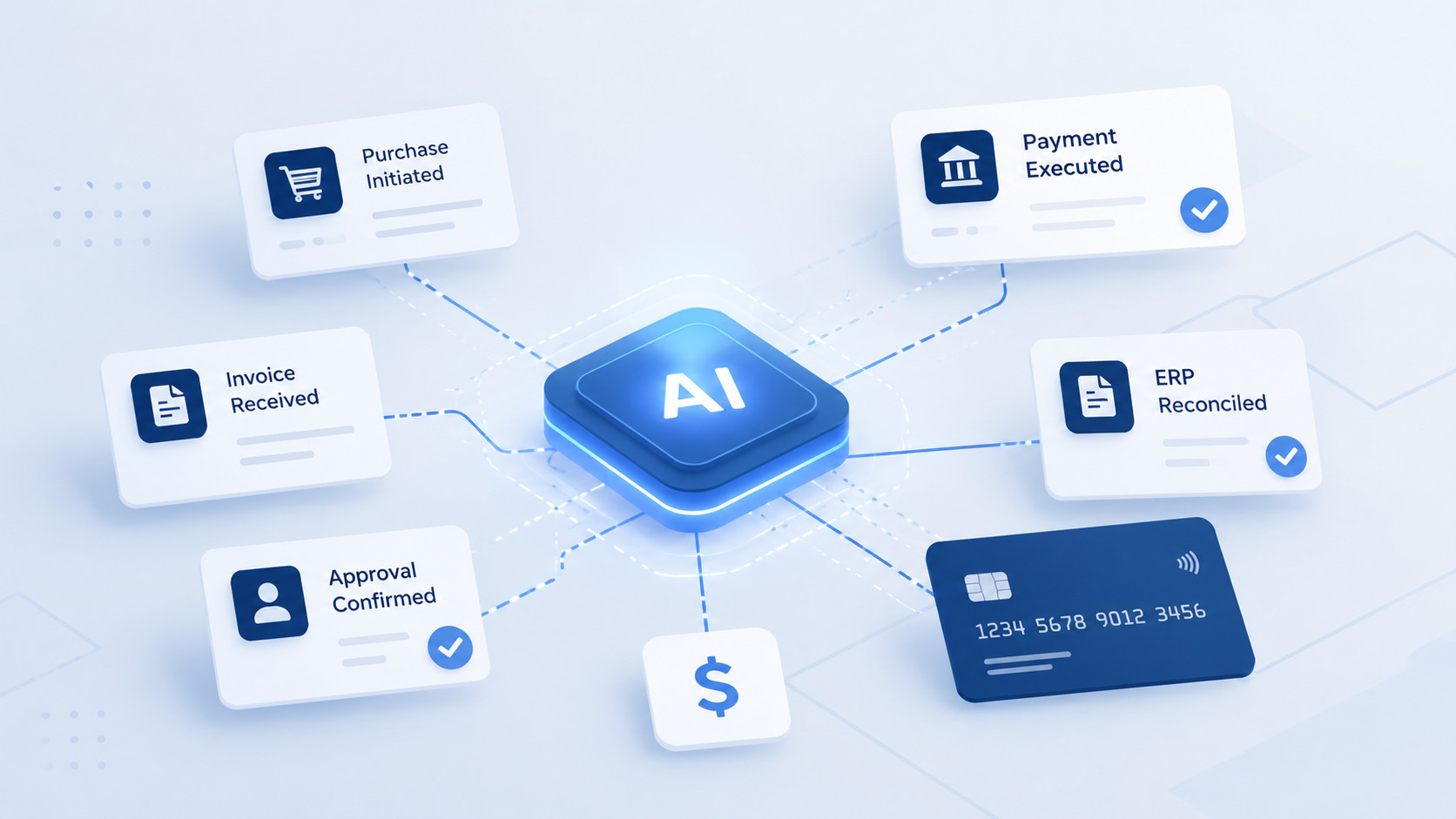
Agentic payments is the point at which AI moves from surfacing recommendations to acting on them. In a B2B context, that means AI systems initiating, approving, and completing payments inside the workflows your platform manages, without a human in the loop at the moment of execution. For businesses running on ERP and vertical software, the implications touch purchase orders, approval chains, credit terms, vendor relationships, and the integrity of financial records that have to be accurate in real time.
Most platforms serving these businesses haven’t fully reckoned with what that requires at the infrastructure level. The ones that do will be in a categorically different position with their clients over the next three to five years.
What Does Agentic Payments Actually Mean for B2B Platforms?
Agentic payments in a consumer context is relatively straightforward to visualize: an AI assistant that reorders supplies when inventory hits a threshold, or completes a purchase without waiting for a human to confirm it. The concept is easy to grasp and, for consumer commerce, fairly contained.
For ERP and software platforms serving B2B businesses, the picture is more layered. The businesses your platform serves don’t operate with simple transaction histories and one-click purchases. They operate with multi-tiered approval workflows, purchase orders tied to project accounting, vendor credit terms, and ERP records that need to reflect every financial obligation accurately and immediately. When AI agents start initiating and completing payments inside those environments, the infrastructure requirements are considerably more demanding than anything consumer-facing agentic commerce asks of a payment system.
Getting ahead of those requirements is the work in front of platform leaders right now.
What Does Agentic Payment Infrastructure Actually Require?
When a client asks whether your platform supports agentic payment workflows, the surface answer is about capability. The more consequential answer is about architecture, specifically whether the payment infrastructure underneath your platform was built in a way that can support autonomous payment activity responsibly.
The governance questions that come with agentic payments are substantive. When an AI agent initiates a payment, how does that transaction move through existing approval workflows? How does it reconcile against ERP records at settlement? What controls ensure it’s operating within the parameters a business has actually authorized? How are disputes resolved when there’s no human who made the purchase decision? When an auditor asks why an action was taken, how do you respond?
Kevin Shamoun, SVP of Platform Innovation at Fortis, puts it directly: “The platforms that are going to lead on agentic payments aren’t the ones rushing to ship a feature. They’re the ones asking the hard questions about disputes, accountability, and workflow integrity now, before those questions become urgent for their clients.”
These aren’t questions that get resolved in a product sprint. They get resolved in the payment infrastructure decisions a platform makes before agentic use cases are even on the roadmap, which is precisely why the timing matters more than most platform leaders currently appreciate.
Why Do Platform Infrastructure Decisions Made Now Matter So Much Later?
Payment capabilities have historically been a threshold conversation for ERP and software platforms. Clients expect to process payments inside the platform, and most platforms have converged on a similar answer to that expectation. Agentic payments shifts that entirely.
A platform that can offer its business users a credible path to autonomous payment workflows, with the governance controls, ERP integration, and dispute resolution infrastructure to back it up, is offering something genuinely differentiated. Not every platform will be able to make that case, and the gap between those that can and those that can’t will widen as client expectations develop.
The differentiation window is the period between now and when agentic payments becomes an expectation rather than a competitive advantage. Platforms making infrastructure decisions today with that future in mind are building a lead. The ones waiting for the use cases to fully mature before making those decisions will find the distance harder to close.
“We’re already working with the card brands and payment associations to make sure Fortis is aligned with where agentic commerce is heading,” says Shamoun. “That work doesn’t happen overnight, and it’s not something platforms should expect to figure out independently. The infrastructure groundwork has to be laid now.”
What Does a Payment Partner Built for Agentic Commerce Look Like?
For most ERP publishers and software platforms, building agentic payment infrastructure independently isn’t a realistic path. The requirements span payment rails, card brand governance, regulatory frameworks, real-time ERP integration, and dispute resolution, and they’re evolving as the ecosystem defines the rules in real time.
A payment partner built for agentic commerce is one already engaged in that ecosystem conversation, working with card brands and associations to ensure the infrastructure is ready when agentic payments moves from emerging to expected. The platforms building on that foundation inherit that preparation rather than having to replicate it.
The clip below captures Kevin’s perspective on where agentic commerce stands today and what Fortis is doing to get ahead of it.
What Should ERP and Software Platforms Be Doing Right Now?
The ERP and software platforms that will be most valuable to their clients three years from now are the ones making deliberate infrastructure decisions today. Not necessarily shipping agentic payment features in the next quarter, but ensuring the payment foundation they’re building on is architected to support autonomous payment workflows when the market is ready for them.
That’s a different conversation than most platforms are currently having with their payment partners. It requires a partner that is actively participating in how agentic payments is being defined at the infrastructure level, not one that will show up with a solution after the standards are already set.
Fortis is engaged in that work now. If you want to understand what it means for your platform’s roadmap, let’s talk.
More posts in Blog
-

Building Payments Around the Way Construction Actually Works
-

Building a Stronger Manufacturing Platform With Embedded Payments
-
Your embedded payments program is live. Is it actually growing?