Are Your Payments Driving Growth? Get Your Free Growth Index Score

Q3 2026 Release Notes

Fortis Q3 2026 Release Notes

Published: October 2026
Period: July–September 2026
Audience: Fortis customers, partners, and ISVs
Location: Fortis Resource Center

Highlights at a Glance

  • ACH in the Virtual Terminal now surfaces clearer, real-time payment status so agents know exactly where a transaction stands after submission.
  • Expanded chargeback and dispute management for Fiserv Rapid Connect streamlines how merchants respond to and resolve disputes.

Virtual Terminal & ACH

ACH Payment Status in the Virtual Terminal

Who’s this for: Merchants and agents processing ACH payments

What’s New: Clearer, real-time ACH payment status messaging after submission.

Summary: The Virtual Terminal now presents clearer status language for ACH payments once they’re submitted, so agents have accurate, real-time visibility into where each transaction stands. The updated messaging is aligned with NACHA requirements and reviewed for compliance and risk.

Impact:

  • Reduced uncertainty and follow-up on ACH transactions
  • Compliant, consistent status language across the payment lifecycle

Risk & Compliance

Chargeback & Dispute Management for Fiserv Rapid Connect

Who’s this for: Merchants processing on Fiserv Rapid Connect

What’s New: Expanded chargeback and dispute handling in the PayFac environment.

Summary: Fortis has broadened dispute management for merchants on Fiserv Rapid Connect, improving how chargebacks are surfaced, tracked, and responded to. Supporting reference material has been developed to help merchants navigate the dispute lifecycle more confidently.

Impact:

  • A more structured, transparent dispute process
  • Better-equipped merchants responding to chargebacks

NACHA Compliance — SEC Code Handling

Who’s this for: Merchants and Partners processing ACH

What’s New: Standard Entry Class (SEC) code mapping aligned to account type.

Summary: ACH processing now maps to the correct NACHA Standard Entry Class codes based on account type — WEB for personal accounts and CCD for business accounts — reinforcing compliant handling across ACH transactions.

Impact:

  • Stronger NACHA compliance posture
  • Correct, consistent SEC code treatment across ACH payments

Portal & Reporting Enhancements

Who’s this for: All Merchant and Partner Portal users

What’s New & Improved:

  • Decline Reason Codes — clearer, more actionable messaging when transactions are declined
  • Report Templates — streamlined, reusable templates for faster reporting
  • Ongoing reconciliation and settlement visibility improvements across portal views

Summary: Q3 brought a series of portal and reporting refinements aimed at giving merchants and partners clearer information and less manual effort in day-to-day operations.

Impact:

  • More actionable decline information at the point of sale
  • Faster, more consistent reporting

Bug Fixes & Platform Stability

Who’s this for: All users

What’s New & Fixed:

  • Continued reliability improvements across portals and integrations
  • Refinements to status and messaging consistency across payment workflows
  • General performance and stability enhancements

Summary: Ongoing stability work continues to ensure a reliable, consistent experience across portals, terminals, and integrations.


Fortis API Information

Explore the tools, resources, and examples available to help you integrate Fortis into your software at fortispay.com/developers.


Building Payments Around the Way Construction Actually Works

Read time: 3 minutes 

Construction doesn’t bill like other industries.

Work may be completed over months or years. Billing follows project progress rather than a traditional point of sale. Payment applications build on previous billing periods. Retainage may hold back a portion of earned revenue. Change orders can alter contract value. Stored materials may need to be accounted for before they’re installed.

For the software platforms serving contractors, those aren’t minor industry details. They’re part of the workflows customers expect their technology to understand.

And they have an important implication for embedded payments: a construction payment experience can’t be designed separately from the construction workflow around it.

In construction, getting paid starts long before the payment

A typical commercial construction billing cycle involves much more than generating an invoice.

Progress billing often starts with a schedule of values (SOV) that breaks the contract into billable components. As work progresses, contractors submit pay applications reflecting work completed during the billing period, prior billings, stored materials, and the amount currently due.

Depending on the project, that process may also involve AIA-style G702/G703 documentation, percent complete, retainage, approved change orders, lien waivers and multiple layers of review and approval. Current construction software products increasingly bring these elements together as one connected billing workflow.

That’s why a generic invoice-to-payment experience only tells part of the story.

The software platform has to understand what happened before a customer is ready to pay—and what needs to happen afterward to keep the project and financial records aligned.

Retainage and progress billing change the payment experience

Take retainage.

A portion of payment may be withheld until contractual conditions are met or the project reaches a later stage. That means the amount earned, the amount billed and the amount actually paid aren’t necessarily the same.

Progress billing creates another layer. Each new pay application may depend on the original contract value, the schedule of values, prior applications, work completed during the current period, stored materials, retainage and approved changes.

For a construction software company, those mechanics matter because customers don’t experience “billing,” “payments,” “project management” and “accounting” as completely separate worlds.

They’re parts of the same project lifecycle.

The opportunity for construction software platforms is bigger than payment acceptance

This is where embedded payments can become strategically interesting for an ISV.

The goal isn’t simply to give contractors another way to accept a card or ACH payment.

It’s to make the payment experience feel like a natural continuation of the project and billing workflows the platform already manages.

For the software provider, that can create value in several ways.

A stronger product experience. Customers can complete more of the project-to-cash workflow without leaving the software.

Greater platform relevance. Connecting project activity, billing, and payments can make the platform more central to the financial side of the job.

Product differentiation. Construction software that understands how the industry actually bills can deliver a more relevant experience than a generic payment capability bolted onto the product.

A path to platform growth. When payments happen within the software, the ISV has an opportunity to participate in payment activity that may otherwise happen through disconnected providers. For example, Concrete Pumping Holdings, the nation’s largest concrete pumping company, offers a look at what that depth of participation can mean. Centralizing payment activity across nearly 95 branches in 23 states, with data flowing nightly into their accounting system for reconciliation, solved exactly the kind of visibility and workflow challenges an ISV’s own customers deal with every day.

The construction workflow becomes the context. The stronger software platform is the outcome.

Don’t force construction workflows into a generic payments model

This is where the payments partner matters.

Construction software companies shouldn’t have to simplify the way their customers work simply because a payment provider was designed around a conventional checkout experience.

A better approach starts with questions such as:

  • How does the platform already handle progress billing?
  • Where do pay applications and approvals happen?
  • How are invoices, project records, and incoming payments connected?
  • What role do retainage and change orders play in the customer experience?
  • Where can payments be introduced without creating another disconnected process?

Those are software-platform questions as much as payments questions.

And they require a partner that understands the vertical—not just the transaction.

Build around the way construction gets paid

Construction software earns its place in the market by understanding the complexity that generic business software doesn’t.

Payments should follow the same principle.

When payment capabilities are designed around project-based billing and connected to the workflows contractors already use, the software platform can provide a more complete experience while strengthening its own value proposition.

The goal isn’t to turn a construction ISV into a payments company.

It’s to help the platform do more for the construction businesses that already depend on it.

For a deeper look at how software platforms can approach embedded payments, explore our Embedded Payments That Strengthen Your Platform guide, including how to evaluate ownership models, adoption strategy, platform value, and the role of a strategic payments partner.

Ready to get started? Contact us, and we’ll walk you through the next steps.

Building a Stronger Manufacturing Platform With Embedded Payments

Read time: 3 minutes 

For manufacturers, a payment rarely stands on its own.

It sits at the end of a much longer operational chain: an order is entered, inventory is allocated, materials move, production happens, goods ship, an invoice is generated, and eventually payment needs to be collected and reconciled.

Manufacturing software platforms already sit at the center of much of that activity. The opportunity with embedded payments is to bring another critical part of the customer workflow into the same experience.

For ISVs serving manufacturers, that makes payments more than an additional feature. Done well, embedded payments can make the platform more useful to customers, create a more connected experience, and give the software provider a greater role in the workflows that drive its customers’ businesses.

Manufacturing workflows don’t end at the invoice

Manufacturing software is built around interconnected processes.

Sales orders affect inventory. Inventory availability influences production planning. Production and fulfillment lead to shipment. Shipment triggers invoicing. And ultimately, incoming payment has to be associated with the right customer, invoice, and business record.

That interconnectedness is why payments shouldn’t be treated as an isolated transaction at the edge of the platform.

Manufacturing systems commonly connect workflows across orders, inventory, production, dispatch, invoicing, and finance. Industry software providers themselves increasingly describe these processes in terms such as quote-to-cash, order-to-cash, procure-to-pay, production planning and inventory management.

When payment happens through a disconnected experience, customers may be forced to move outside the system they use to run the rest of the business.

For the software platform, that’s a missed opportunity to make the product more complete.

Embedded payments should fit the way manufacturers already work

Embedding payments isn’t simply about placing a payment button inside an application.

The more important question is whether payments fit naturally into the workflows the platform already supports.

A manufacturing customer may need to accept ACH or commercial card payments against an invoice, manage payment terms across business customers, identify incoming payments, and reconcile those payments back to the appropriate records.

The exact requirements vary by manufacturer and software platform. But the principle is consistent: the payments experience should adapt to the business workflow rather than forcing the business workflow to adapt to payments.

That’s particularly important in B2B environments, where the transaction is often only one step in a larger financial and operational process.

A stronger payments experience can make the platform stronger

For manufacturing ISVs, the strategic opportunity isn’t simply to help customers accept another form of payment.

It’s to ask what role payments should play in the broader platform strategy.

There are several ways to think about that value.

A more connected customer experience. When payments live closer to invoicing and the other workflows customers already manage in the platform, users have fewer reasons to move between disconnected systems.

Greater product value. Extending the workflow through payment can make the platform more central to how customers run their businesses.

New revenue opportunities. Payment activity already taking place across the customer base may create an additional opportunity for platform monetization.

More differentiation. For software providers competing in specialized manufacturing markets, an embedded payments strategy designed around real manufacturing workflows can become part of the product experience rather than a generic add-on.

That changes the strategic question from “Should we add payments?” to “How can payments make our platform more valuable?”

Integration is only the beginning

The technical integration matters, but getting payments live isn’t the same thing as building a successful payments program.

Software platforms also need to think about how customers discover the capability, how they activate it, how it fits into existing workflows and what will drive adoption over time.

That makes the right payments relationship important beyond APIs and processing.

An embedded payments partner should understand the B2B environment the ISV serves, help the platform determine how much of the payments experience it wants to own, and support the program as it moves from integration to activation, adoption and growth.

Build payments around the platform you’re already building

Manufacturing ISVs don’t need to become payments companies to make payments a more valuable part of their product.

They need a strategy that recognizes the complexity of the manufacturing environment and connects payments to the workflows their customers already rely on.

When that happens, payments become more than the last step in a transaction. They become another way for the platform to create value for customers—and participate more deeply in the business activity it already supports.

 Want to explore what that could look like for your platform? Read our Embedded Payments That Strengthen Your Platform guide for a deeper look at ownership models, adoption, platform growth and what to evaluate in an embedded payments partner.

Ready to get started? Contact us, and we’ll walk you through the next steps.

Q2 2026 Release Notes

Q2 2026 Release Notes

Published: August 2026
Period: April–June 2026
Audience: Fortis customers, partners, and ISVs
Location: Fortis Resource Center

Self-Service and Account Management: More Control, Less Friction

Who This Is For
Merchants, partners, and customer support teams

What’s New

  • Guided, step-by-step account change requests
  • Support for bank account, legal name, business name, DBA, and other account information changes
  • Clearer merchant- and partner-facing status messages
  • New APIs and audit visibility for account and signer updates

Summary
Fortis expanded its self-service capabilities, allowing merchants and partners to submit and track account changes through a consistent, guided experience. Each request walks users through prequalification, document upload, verification, review, and submission. Refined status messages and expanded request histories provide better visibility into the progress of each request.

Value

  • Faster turnaround for account changes
  • Better visibility into request progress
  • Less reliance on customer support

Partner Reporting: Insights on Your Terms

Who This Is For
Partners, agents, and ISVs

What’s New

  • Configurable dashboards built from a catalog of tiles
  • Drag-and-drop reordering, tile resizing, and saved views
  • Dashboard and individual chart exports to PNG or PDF
  • Expanded reports, including Volume by Agent and Application Lifecycle

Summary
Partners now have greater control over how they view and manage their business data. A new dashboard framework allows users to assemble views from a catalog of tiles, rearrange and resize them, and save multiple named layouts without engineering support. Expanded lead, application, and residual reporting provides timely insight into volume, application activity, and agent performance.

Value

  • Self-service, tailored reporting
  • Faster access to important business metrics
  • Less reliance on custom reporting requests

Merchant Portal: Clearer Reconciliation and Reporting

Who This Is For
Merchants, finance teams, and ISVs

What’s New

  • Deposit Reconciliation that connects deposits to their underlying batches and transactions
  • Tax on Surcharge support across invoices, PayLinks, checkout, refunds, and terminals
  • Subtotals displayed across transactions and reports
  • Reusable and shareable report templates

Summary
Fortis made it easier for merchants to reconcile the funds they receive. Deposit Reconciliation connects a bank deposit to the gateway batches, ACH payments, and card transactions that funded it, with consistent columns across detailed views and exports. Merchants in applicable jurisdictions can also calculate and display tax on surcharge amounts across payment channels. Reusable report templates allow teams to save, share, and reapply their preferred reporting views.

Value

  • Deposit-to-transaction reconciliation without manual spreadsheets
  • Consistent surcharge and tax handling in applicable jurisdictions
  • Clearer, more consistent reporting

Boarding and Underwriting: Faster, Smarter Onboarding

Who This Is For
Partners, agents, and underwriting and risk teams

What’s New

  • Automatic boarding for approved ACH-only accounts
  • Automated underwriting enriched with identity and bank verification data
  • Agent-initiated applications with a structured, audited review workflow
  • New risk controls and underwriting audit logs

Summary
Fortis continued to make merchant onboarding faster and more efficient. Approved ACH-only accounts can now be boarded automatically, removing a manual step from eligible applications. Automated underwriting incorporates current identity and bank verification data into risk decisions. Agents can also initiate applications on a merchant’s behalf and route them through a structured, fully audited review workflow supported by enhanced risk controls.

Value

  • Faster time to board for eligible merchants
  • Stronger, better-documented underwriting decisions
  • More flexibility for agent-assisted boarding

Payments, Devices, and Gateway: More Reliable Processing

Who This Is For
Merchants, ISVs, and ERP and gateway integrators

What’s New

  • Support for onboarding merchants to PayPal International
  • Continued PAX terminal application improvements
  • Canadian Debit (Interac) support
  • Card network compliance and gateway settlement enhancements
  • Level 3 data support for Sage Intacct payments

Summary
Fortis expanded payment acceptance capabilities and strengthened processing reliability across channels. Merchants can now be onboarded to PayPal International, while continued terminal application updates improve the card-present payment experience. Additional gateway enhancements support current card network requirements and improve batch settlement reliability. The Fortis integration with Sage Intacct also now supports Level 3 data, helping eligible commercial card payments qualify for lower interchange rates.

Value

  • Broader payment acceptance capabilities
  • More reliable in-person payment processing
  • Potential interchange savings on eligible commercial card payments

Data Hub: A Stronger Data and Reconciliation Foundation

Who This Is For
Enterprise merchants, partners, and data and finance teams

What’s New

  • End-to-end deposit traceability from the portal through settlement
  • Automated end-of-cycle residual processing
  • Expanded alerting, monitoring, and data-quality controls
  • Continued consolidation of portfolio data into unified reporting

Summary
Fortis continued to strengthen the data platform that supports partner and merchant reporting. Deposit traceability connects deposits displayed in the portal to their underlying batches and transactions. Automated residual and end-of-cycle processing helps accelerate the monthly close, while expanded monitoring, alerting, and data-quality controls provide more complete and reliable information for reconciliation and analytics.

Value

  • More accurate reporting and reconciliation
  • Faster monthly close processes
  • Fewer data gaps and manual corrections

Q2 2026 at a Glance

  • Launched guided self-service capabilities for merchant and partner account changes
  • Introduced configurable Partner Reporting dashboards with saved views and exports
  • Expanded Merchant Portal deposit reconciliation, surcharge, and reporting capabilities
  • Enabled automatic boarding for eligible ACH-only accounts and agent-initiated applications
  • Broadened payment acceptance and strengthened gateway and device reliability
  • Enhanced the Data Hub foundation supporting reconciliation and reporting

Fortis API Information

Explore the tools, resources, and examples available to help you integrate Fortis into your software at fortispay.com/developers.

Q1 2026 Release Notes

Period: January– March 2026
Audience: Fortis customers, partners, and ISVs
Published: April 2026
Location: Fortis Resource Center

Apple Tap to Pay on iPhone – Expanded Capabilities

Who this is for
Merchants, Partners, ISVs, Mobile Users

What’s New

  • Tap to Pay enabled across Merchant Portal Mobile
  • Support for sales, auth-only transactions, and refunds
  • No hardware required; accept contactless payments directly on iPhone
  • Improved onboarding, device compatibility checks, and permissions

Summary
Fortis expanded Tap to Pay on iPhone into a complete in-person payment solution. Merchants can now accept payments, issue refunds, and manage transactions entirely from their iPhone without needing additional hardware. Enhancements to onboarding and device compatibility make it easier than ever to get started and scale usage across teams.


Value

  • Faster time to accept payments
  • Lower hardware costs
  • Simplified in-person checkout experience

Data Hub – Smarter, More Reliable Data & Reporting

Who this is for
Enterprise Merchants, Partners, Data & Finance Teams

What’s New

  • Dual settlement data processing for more complete transaction visibility
  • Improved data accuracy across settlements, chargebacks, and reporting
  • Enhanced retry logic and system reliability
  • Expanded data fields for deeper insights and reconciliation

Summary
Fortis delivered major upgrades to Data Hub to improve how transaction data is captured, processed, and reported. Enhancements like dual settlement ingestion and improved pipeline reliability ensure more complete and accurate financial data, even for late or complex transactions. These updates reduce reporting gaps and give teams greater confidence in reconciliation and analytics.

Value

  • More accurate reporting and reconciliation
  • Better visibility into transaction activity
  • Fewer data gaps and manual fixes

Merchant Portal – Faster, Clearer Payment Workflows

Who this is for
Merchants, ISVs, Support Teams

What’s New

  • Improved deposit reconciliation and reporting visibility
  • Clearer payment and refund statuses (including PayPal/Venmo)
  • Better error messaging and validation during checkout
  • Expanded fraud protections and bot detection

Summary
Enhancements to the Merchant Portal improve clarity and usability across key payment workflows. Merchants now receive more transparent transaction statuses and clearer error messaging, reducing confusion and support needs. Additional improvements to reconciliation and fraud protection help ensure smoother day-to-day operations.

Value

  • Fewer failed or confusing transactions
  • Faster issue resolution
  • Improved checkout experience for customers

Self-Service & Onboarding – More Automation, Less Friction

Who this is for
Merchants, Partners, Underwriting Teams

What’s New

  • Expanded self-service capabilities for merchant updates
  • Automated onboarding
  • Enhanced validation and data consistency across applications
  • Improved workflows for contact and account management

Summary
Fortis continued to expand self-service capabilities, enabling merchants to manage updates and onboarding tasks with less manual support. Improvements to automation and validation streamline workflows and reduce delays during onboarding and account changes. These updates help both merchants and internal teams move faster with fewer errors.

Value

  • Faster onboarding
  • Reduced operational overhead
  • Better user experience for merchants and partners

Payments & Gateway – More Reliable Transaction Processing

Who this is for
Merchants, ISVs, Developers

What’s New

  • Improved refund handling and batch accuracy
  • Enhanced support for Apple Pay and digital wallets
  • Better handling of edge cases (surcharging, partial payments, reversals)
  • Increased transaction reliability across processors

Summary
Fortis strengthened its core payment processing to ensure transactions are handled accurately and consistently across all scenarios. Updates address edge cases like refunds, surcharging, and partial payments, reducing errors and improving batch integrity. These improvements lead to a more dependable payment experience for both merchants and customers.

Value

  • Fewer declined or failed transactions
  • More reliable payment processing
  • Improved customer payment experience

Integrations & Developer Experience – Easier to Build and Scale

Who this is for
Developers, ISVs, Integration Partners

What’s New

  • API enhancements and improved error handling
  • New tools for managing API keys and credentials
  • Expanded reporting and endpoint capabilities

Summary
Enhancements across APIs and integrations make it easier for developers and partners to build and scale on the Fortis platform. Improved error handling, expanded capabilities, and better tooling reduce development friction and speed up time to market. These updates support more flexible and scalable integrations across a variety of use cases.

Value

  • Faster integrations
  • Better developer visibility and control
  • Reduced support overhead

Q1 2026 at a Glance

  • Expanded Tap to Pay on iPhone into a full payment solution
  • Delivered major Data Hub reliability and reporting upgrades
  • Improved Merchant Portal usability and payment clarity
  • Increased automation in onboarding and self-service
  • Strengthened payment processing and integrations

Fortis API Information

Explore tools, resources, and examples to integrate Fortis into your software

Visa’s Commercial Enhanced Data Program: Impact on B2B Payments

How Fortis partners help businesses lower interchange through clean, verified transaction data under Visa’s Commercial Enhanced Data Program (CEDP)

Why B2B Payment Costs Are Rising, and What’s Changing

Many businesses pay more than they should for credit card processing—not because of their payment provider, but because of missing or incomplete transaction data. When details like invoice numbers, tax amounts, or purchase order information aren’t captured and transmitted accurately, transactions default to higher interchange tiers and costs rise. 

Visa’s Commercial Enhanced Data Program (CEDP), active since October 2025, brings those inefficiencies into focus. For the first time, data accuracy directly determines interchange cost, creating a clear incentive for businesses to modernize how they capture, validate, and submit payment data.

For ERP providers, software platforms, and their customers, CEDP turns payment data quality into a measurable financial outcome.

What Is Visa’s Commercial Enhanced Data Program (CEDP)

Visa’s Commercial Enhanced Data Program (CEDP) is a framework that links interchange rates for U.S. B2B and small business card transactions to the completeness and accuracy of transaction data. Businesses that submit verified, enhanced data qualify for lower interchange rates, while transactions with missing or inaccurate data incur higher costs.

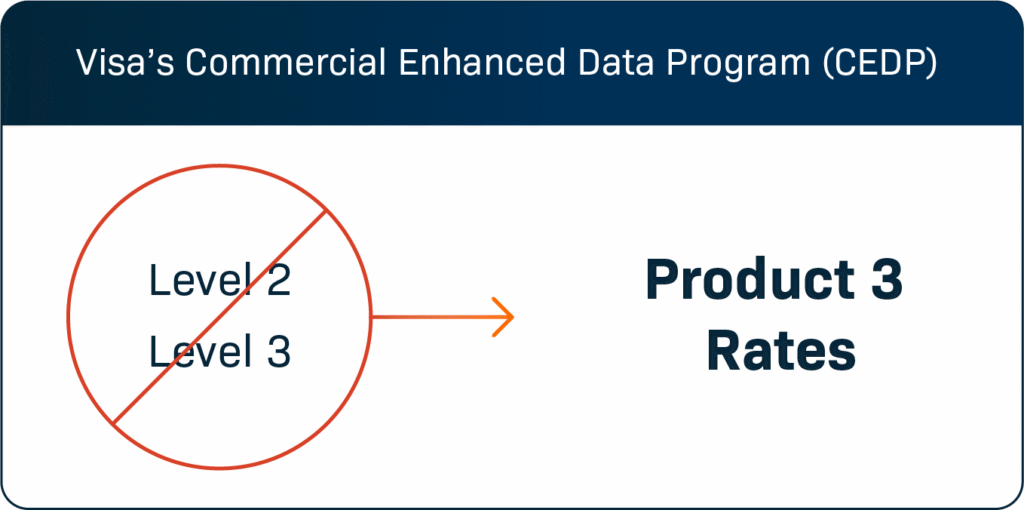
CEDP replaces the old Level 2 and Level 3 structure with a single, standardized validation model, making data quality a direct driver of payment economics.

CEDP Rewards Accuracy—and Exposes Data Gaps

Under CEDP, businesses that submit complete, validated transaction data are classified as verified and qualify for Visa’s Product 3 interchange rates.

  • Verified Product 3 transactions generally qualify in the 1.75%–2.05% range
  • Non-verified transactions typically range from 2.65%-2.95%
  • Even after Visa’s 0.05% participation fee, verified transactions can deliver a 7–10% reduction in interchange costs

Businesses that fail to meet verification requirements continue paying higher rates—while still incurring the participation fee, raising their effective processing costs. The implication is clear: enhanced data is no longer optional. It’s a cost-control requirement.

Why Visa CEDP Matters for B2B Organizations

erp icon

Visa now validates qualifying transactions in real time, checking for data completeness and accuracy. Clean, consistent data unlocks better rates; gaps or inconsistencies increase costs.

  • Data quality becomes a financial strategy—not just a back-office task
  • Line-item detail, tax, duty, and freight accuracy directly affect interchange
  • Businesses that modernize benefit from lower costs; those that don’t face rising expense and competitive pressure

CEDP makes payment performance transparent—and actionable.

How Fortis Partners Create Immediate Value

partnership icon

ERP and software partners are uniquely positioned to help businesses adapt to CEDP. Through Fortis, partners can embed CEDP-ready payment experiences directly into the ERP systems their customers already use.

1. Built-in Alignment with CEDP Requirements

Fortis provides standardized data models, APIs, and reporting tools that support Visa’s validation standards. Partners can map required fields, enable accurate data capture, and reduce manual processes that introduce risk and cost.

2. Deep ERP and Commerce Integrations

Fortis integrates directly with platforms such as Acumatica, NetSuite, Sage, and Microsoft Dynamics 365 Business Central—so enhanced data is captured at the source.

These integrations help businesses:

  • Auto-populate line-item and tax data
  • Reduce validation errors that lead to disqualification
  • Maintain consistent verification without added operational burden

3. Real-Time Visibility into Interchange Qualification

Partners can give customers insight into which transactions qualify, which don’t, and why—turning data transparency into measurable cost savings.

What the Cost Savings Can Look Like

reporting icon

The difference between verified and non-verified commercial card transactions can be meaningful, particularly at scale.

Verified Product 3 transactions generally qualify in the 1.75%–2.05% interchange range, compared to 2.65%–2.95% for non-verified transactions. That difference reflects how Visa rewards complete, validated transaction data—not negotiated pricing.

For every $100,000 in B2B payment volume, that gap can translate into hundreds of dollars in potential savings. For manufacturers, distributors, and service providers processing large invoice values, the cumulative impact increases as volume grows.

Rather than a one-time adjustment, CEDP turns interchange optimization into an ongoing opportunity. As data quality improves and more transactions qualify as verified, businesses can continuously reduce unnecessary payment costs over time.

CEDP Is a Part of a Broader B2B Payments Modernization Trend

Beyond cost savings, CEDP reinforces a broader shift in B2B finance toward greater visibility, automation, and control. Finance and operations leaders are modernizing payment workflows to reduce reconciliation effort and improve data accuracy across systems.

Visa’s program rewards organizations that invest in clean, connected payment data, making enhanced data the new standard for operational efficiency.

The Fortis Advantage: A Platform Built for What’s Next

dashboard icon

Fortis provides the infrastructure partners need to succeed under CEDP and beyond. With standardized data models, developer-friendly APIs, and real-time reporting, Fortis makes it easy to embed CEDP-ready payments into ERP and software platforms.

  • Capture enhanced data automatically
  • Reduce validation failures
  • Qualify for lower interchange rates
  • Improve long-term efficiency and financial control

As CEDP adoption accelerates, early movers will realize measurable savings first. Fortis partners are positioned to bridge the gap between transaction data and payment performance—delivering accuracy, transparency, and confidence at scale.

The Bottom Line

Visa CEDP changes how B2B payment costs are determined, shifting the focus from card type to data quality. Businesses that adapt early can reduce interchange, improve visibility, and strengthen financial control.

With Fortis, partners can help customers meet today’s requirements while building a more efficient, future-ready payments foundation.

Let’s start the conversation about how Visa CEDP fits into your broader payment strategy.

Digital Wallets and the Shift in Payment Expectations Heading Into 2026

Why Modern Payment Experiences Are Now Critical to Customer Retention

As organizations look ahead to 2026, one reality is already clear: customer expectations around payments have permanently changed. What once felt like a competitive differentiator—fast, flexible, digital payment options—has become the baseline. 

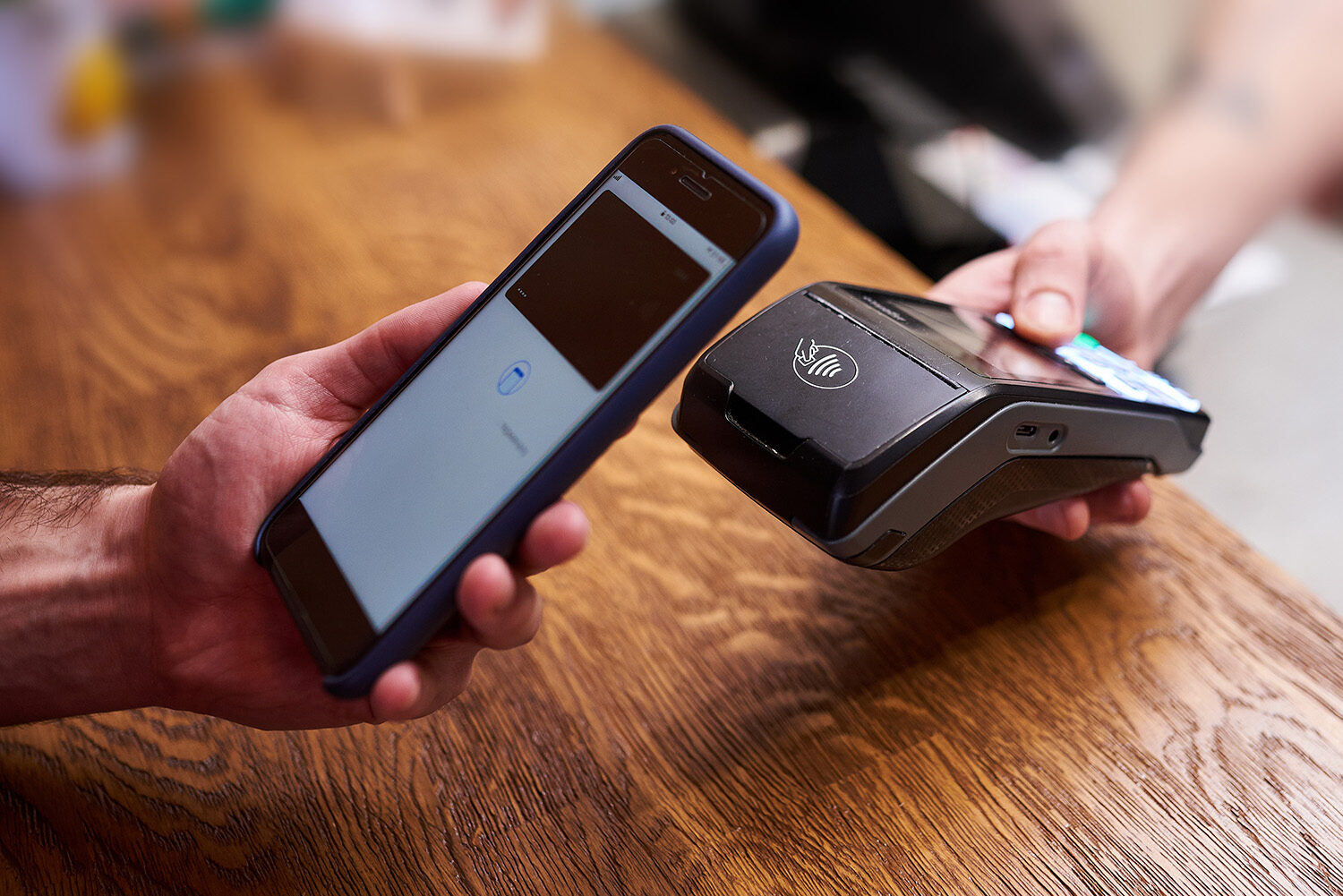
Digital wallets such as Apple Pay, Google Pay, PayPal, and Venmo are no longer viewed as emerging capabilities or optional enhancements. They reflect how customers expect digital experiences to work. When those expectations aren’t met, friction shows up quickly—and over time, that friction impacts trust, satisfaction, and retention.

For businesses, software platforms, and ISVs, the strategic implication isn’t about unlocking incremental payment revenue.  It’s about protecting customer relationships by removing moments of friction that quietly erode loyalty. 

Digital Wallet Adoption Reflects Changing Expectations 

Digital wallet adoption continues to accelerate globally, but the real signal isn’t adoption alone. It’s what that adoption says about customer tolerance for friction.  

According to Capital One Shopping, over 4.3 billion people worldwide used digital wallets in 2024, with usage projected to reach 5.8 billion by 2029.  In the U.S., more than half of adults already rely on digital wallets—not because they’re novel, but because they’re faster, simpler, and feel more secure. 

Wallets succeed because they remove effort from the transaction. Biometric authentication, tokenization, and stored credentials allow payments to happen quickly and confidently, without forcing customers to think about the mechanics behind them. 

Payment Expectations Are Retention Expectations 

Digital wallets now account for 53% of global online purchases and 32% of in-store transactions, according to Capital One Shopping. But the more telling insight is behavioral, not transactional: 51% of digital wallet users have stopped shopping with a business that only accepted traditional payment methods. 

This isn’t about preference. It’s about patience—or the lack of it. When payment experiences feel outdated or inconvenient, customers don’t just notice. They interpret that friction as a signal about the organization itself. 

Over time, those signals compound—and churn follows. The payment experience has become one of the most visible drivers of customer retention. 

Why This Shift Matters for Platforms and ISVs 

For software platforms and ISVs, payment experience is inseparable from product experience. As payments become embedded into workflows, any friction at the point of payment reflects back on the platform delivering it. 

Digital wallets are increasingly used for: 

  • Embedded payments within vertical SaaS platforms 
  • Subscription-based B2B purchases and renewals 
  • Mobile invoicing and field-service interactions 
  • Corporate and virtual card transactions 

In these environments, even minor points of friction can trigger outsized consequences—support tickets, delayed payments, abandoned transactions, or strained customer relationships. 

Each issue may seem small in isolation. Together, they erode long-term loyalty. 

The Convergence of eCommerce and B2B Expectations 

Another critical shift heading into 2026 is the convergence of consumer and business payment expectations.  

Today’s business buyers are also consumers—and they increasingly expect the same speed, flexibility, and familiarity in professional transactions that they experience personally. As B2B interactions move toward self-serve, digital-first models, tolerance for rigid or manual payment processes continues to shrink. Digital wallets sit at the center of this convergence. They offer a consistent experience across personal and professional contexts, reinforcing a simple truth: ease is no longer channel-specific. 

For organizations focused on retention, consistency across experiences matters.  Friction in one channel doesn’t stay isolated—it influences how customers perceive the entire relationship. 

Digital Wallets as Signals of Experience Maturity 

Digital wallets are evolving beyond simple card storage. Many now support additional payment rails and use cases. But the strategic insight isn’t about feature breadth—it’s about adaptability. 

Wallet support signals whether an organization’s payment infrastructure is built to: 

  • Reduce effort rather than introduce steps
  • Integrate seamlessly into broader digital journeys 
  • Adapt as customer expectations evolve 

Organizations that lack this flexibility may not lose customers overnight. But over time, misaligned experiences quietly increase dissatisfaction—and attrition becomes inevitable. 

Why Fortis Thinks About Payments Differently 

At Fortis, we see payment experience as a critical extension of the customer relationship—not just a transaction layer. As expectations continue to rise, modern payment strategies must be designed to reduce friction, reinforce trust, and scale alongside customer growth. 

That’s why we focus on helping platforms, ISVs, and businesses align payment experiences with how customers actually want to interact—today and in the future. When payments work the way users expect, they strengthen retention instead of putting it at risk.  

The Bottom Line: Retention Follows Experience 

Retention is no longer driven by individual transactions—it’s shaped by cumulative experience. Payment flows that feel slow, manual, or disconnected from the rest of the journey quietly undermine trust. 

Heading into 2026, the organizations that win on retention will be the ones that remove friction wherever it appears—especially at the point of payment. When payment experiences work the way customers expect, they fade into the background. 

And that’s exactly where they belong.

Let’s start the conversation about how payment experience impacts customer retention.