
Enjoying the Fortis experience? Leave a review on Trustpilot!

Visa’s Commercial Enhanced Data Program: Impact on B2B Payments

How Fortis partners help businesses lower interchange through clean, verified transaction data under Visa’s Commercial Enhanced Data Program (CEDP)

Why B2B Payment Costs Are Rising, and What’s Changing

Many businesses pay more than they should for credit card processing—not because of their payment provider, but because of missing or incomplete transaction data. When details like invoice numbers, tax amounts, or purchase order information aren’t captured and transmitted accurately, transactions default to higher interchange tiers and costs rise. 

Visa’s Commercial Enhanced Data Program (CEDP), active since October 2025, brings those inefficiencies into focus. For the first time, data accuracy directly determines interchange cost, creating a clear incentive for businesses to modernize how they capture, validate, and submit payment data.

For ERP providers, software platforms, and their customers, CEDP turns payment data quality into a measurable financial outcome.

What Is Visa’s Commercial Enhanced Data Program (CEDP)

Visa’s Commercial Enhanced Data Program (CEDP) is a framework that links interchange rates for U.S. B2B and small business card transactions to the completeness and accuracy of transaction data. Businesses that submit verified, enhanced data qualify for lower interchange rates, while transactions with missing or inaccurate data incur higher costs.

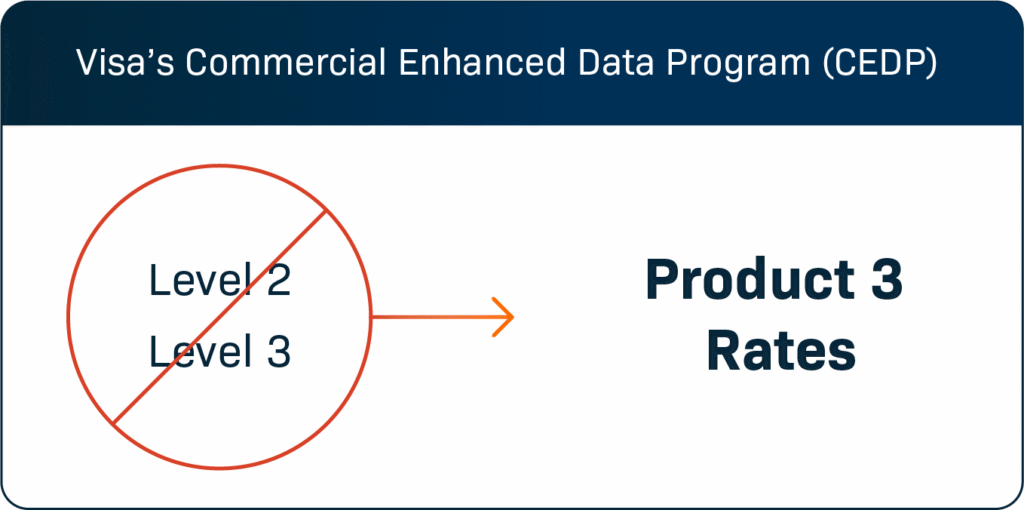
CEDP replaces the old Level 2 and Level 3 structure with a single, standardized validation model, making data quality a direct driver of payment economics.
CEDP Rewards Accuracy—and Exposes Data Gaps

Under CEDP, businesses that submit complete, validated transaction data are classified as verified and qualify for Visa’s Product 3 interchange rates.

  • Verified Product 3 transactions generally qualify in the 1.75%–2.05% range
  • Non-verified transactions typically range from 2.65%-2.95%
  • Even after Visa’s 0.05% participation fee, verified transactions can deliver a 7–10% reduction in interchange costs

Businesses that fail to meet verification requirements continue paying higher rates—while still incurring the participation fee, raising their effective processing costs. The implication is clear: enhanced data is no longer optional. It’s a cost-control requirement.

Why Visa CEDP Matters for B2B Organizations

Visa now validates qualifying transactions in real time, checking for data completeness and accuracy. Clean, consistent data unlocks better rates; gaps or inconsistencies increase costs.

  • Data quality becomes a financial strategy—not just a back-office task
  • Line-item detail, tax, duty, and freight accuracy directly affect interchange
  • Businesses that modernize benefit from lower costs; those that don’t face rising expense and competitive pressure

CEDP makes payment performance transparent—and actionable.

How Fortis Partners Create Immediate Value

ERP and software partners are uniquely positioned to help businesses adapt to CEDP. Through Fortis, partners can embed CEDP-ready payment experiences directly into the ERP systems their customers already use.

1. Built-in Alignment with CEDP Requirements

Fortis provides standardized data models, APIs, and reporting tools that support Visa’s validation standards. Partners can map required fields, enable accurate data capture, and reduce manual processes that introduce risk and cost.

2. Deep ERP and Commerce Integrations

Fortis integrates directly with platforms such as Acumatica, NetSuite, Sage, and Microsoft Dynamics 365 Business Central—so enhanced data is captured at the source.

These integrations help businesses:

  • Auto-populate line-item and tax data
  • Reduce validation errors that lead to disqualification
  • Maintain consistent verification without added operational burden

3. Real-Time Visibility into Interchange Qualification

Partners can give customers insight into which transactions qualify, which don’t, and why—turning data transparency into measurable cost savings.

What the Cost Savings Can Look Like
The difference between verified and non-verified commercial card transactions can be meaningful, particularly at scale.

Verified Product 3 transactions generally qualify in the 1.75%–2.05% interchange range, compared to 2.65%–2.95% for non-verified transactions. That difference reflects how Visa rewards complete, validated transaction data—not negotiated pricing.

For every $100,000 in B2B payment volume, that gap can translate into hundreds of dollars in potential savings. For manufacturers, distributors, and service providers processing large invoice values, the cumulative impact increases as volume grows.

Rather than a one-time adjustment, CEDP turns interchange optimization into an ongoing opportunity. As data quality improves and more transactions qualify as verified, businesses can continuously reduce unnecessary payment costs over time.

CEDP Is a Part of a Broader B2B Payments Modernization Trend

Beyond cost savings, CEDP reinforces a broader shift in B2B finance toward greater visibility, automation, and control. Finance and operations leaders are modernizing payment workflows to reduce reconciliation effort and improve data accuracy across systems.

Visa’s program rewards organizations that invest in clean, connected payment data, making enhanced data the new standard for operational efficiency.

The Fortis Advantage: A Platform Built for What’s Next

Fortis provides the infrastructure partners need to succeed under CEDP and beyond. With standardized data models, developer-friendly APIs, and real-time reporting, Fortis makes it easy to embed CEDP-ready payments into ERP and software platforms.

  • Capture enhanced data automatically
  • Reduce validation failures
  • Qualify for lower interchange rates
  • Improve long-term efficiency and financial control

As CEDP adoption accelerates, early movers will realize measurable savings first. Fortis partners are positioned to bridge the gap between transaction data and payment performance—delivering accuracy, transparency, and confidence at scale.

The Bottom Line

Visa CEDP changes how B2B payment costs are determined, shifting the focus from card type to data quality. Businesses that adapt early can reduce interchange, improve visibility, and strengthen financial control.

With Fortis, partners can help customers meet today’s requirements while building a more efficient, future-ready payments foundation.

Let’s start the conversation about how Visa CEDP fits into your broader payment strategy.
Digital Wallets and the Shift in Payment Expectations Heading Into 2026

Why Modern Payment Experiences Are Now Critical to Customer Retention

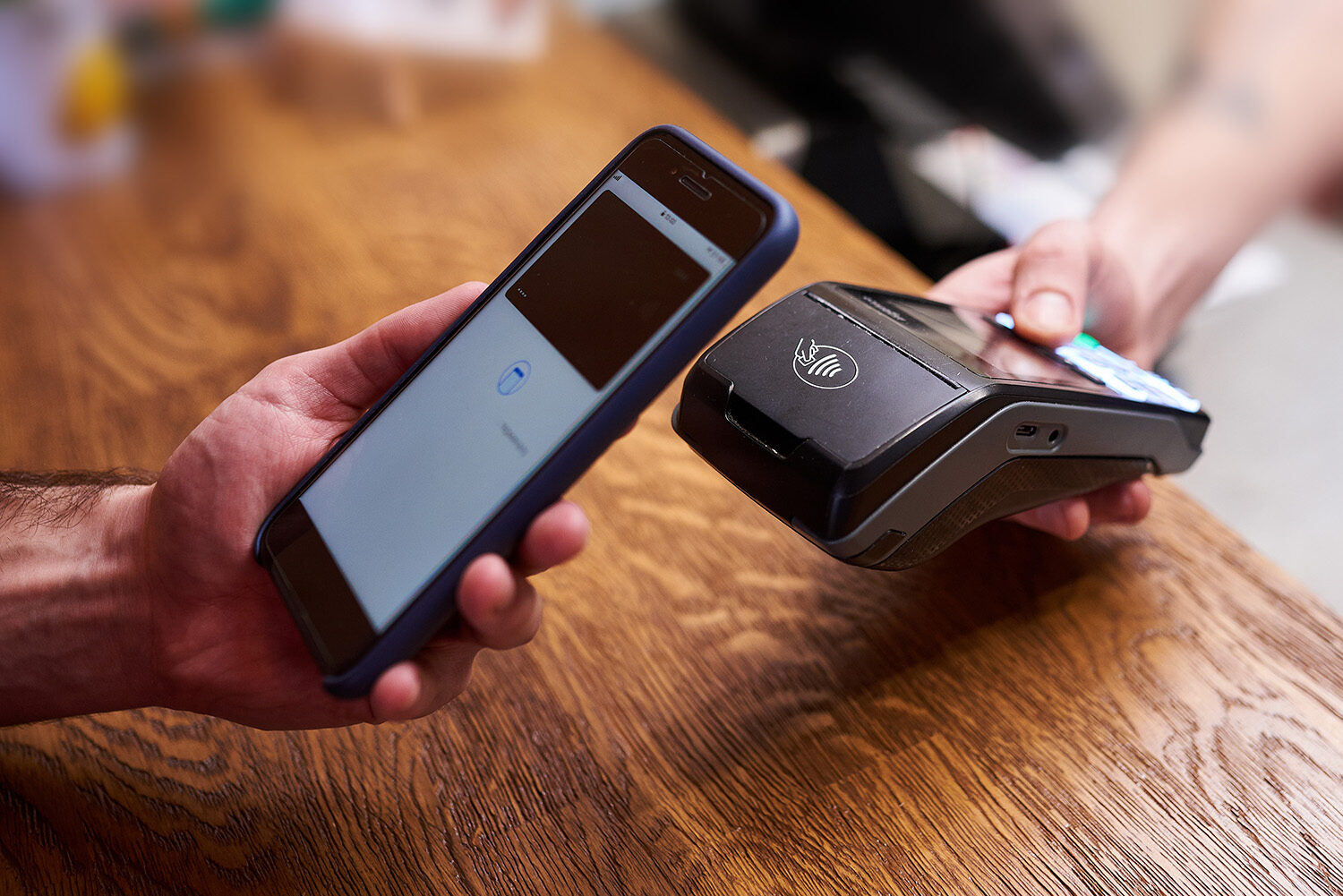
As organizations look ahead to 2026, one reality is already clear: customer expectations around payments have permanently changed. What once felt like a competitive differentiator—fast, flexible, digital payment options—has become the baseline. 

Digital wallets such as Apple Pay, Google Pay, PayPal, and Venmo are no longer viewed as emerging capabilities or optional enhancements. They reflect how customers expect digital experiences to work. When those expectations aren’t met, friction shows up quickly—and over time, that friction impacts trust, satisfaction, and retention.

For businesses, software platforms, and ISVs, the strategic implication isn’t about unlocking incremental payment revenue.  It’s about protecting customer relationships by removing moments of friction that quietly erode loyalty. 

Digital Wallet Adoption Reflects Changing Expectations 

Digital wallet adoption continues to accelerate globally, but the real signal isn’t adoption alone. It’s what that adoption says about customer tolerance for friction.  

According to Capital One Shopping, over 4.3 billion people worldwide used digital wallets in 2024, with usage projected to reach 5.8 billion by 2029.  In the U.S., more than half of adults already rely on digital wallets—not because they’re novel, but because they’re faster, simpler, and feel more secure. 

Wallets succeed because they remove effort from the transaction. Biometric authentication, tokenization, and stored credentials allow payments to happen quickly and confidently, without forcing customers to think about the mechanics behind them. 

Payment Expectations Are Retention Expectations 

Digital wallets now account for 53% of global online purchases and 32% of in-store transactions, according to Capital One Shopping. But the more telling insight is behavioral, not transactional: 51% of digital wallet users have stopped shopping with a business that only accepted traditional payment methods. 

This isn’t about preference. It’s about patience—or the lack of it. When payment experiences feel outdated or inconvenient, customers don’t just notice. They interpret that friction as a signal about the organization itself. 

Over time, those signals compound—and churn follows. The payment experience has become one of the most visible drivers of customer retention. 

Why This Shift Matters for Platforms and ISVs 

For software platforms and ISVs, payment experience is inseparable from product experience. As payments become embedded into workflows, any friction at the point of payment reflects back on the platform delivering it. 

Digital wallets are increasingly used for: 

  • Embedded payments within vertical SaaS platforms 
  • Subscription-based B2B purchases and renewals 
  • Mobile invoicing and field-service interactions 
  • Corporate and virtual card transactions 

In these environments, even minor points of friction can trigger outsized consequences—support tickets, delayed payments, abandoned transactions, or strained customer relationships. 

Each issue may seem small in isolation. Together, they erode long-term loyalty. 

The Convergence of eCommerce and B2B Expectations 

Another critical shift heading into 2026 is the convergence of consumer and business payment expectations.  

Today’s business buyers are also consumers—and they increasingly expect the same speed, flexibility, and familiarity in professional transactions that they experience personally. As B2B interactions move toward self-serve, digital-first models, tolerance for rigid or manual payment processes continues to shrink. Digital wallets sit at the center of this convergence. They offer a consistent experience across personal and professional contexts, reinforcing a simple truth: ease is no longer channel-specific. 

For organizations focused on retention, consistency across experiences matters.  Friction in one channel doesn’t stay isolated—it influences how customers perceive the entire relationship. 

Digital Wallets as Signals of Experience Maturity 

Digital wallets are evolving beyond simple card storage. Many now support additional payment rails and use cases. But the strategic insight isn’t about feature breadth—it’s about adaptability. 

Wallet support signals whether an organization’s payment infrastructure is built to: 

  • Reduce effort rather than introduce steps
  • Integrate seamlessly into broader digital journeys 
  • Adapt as customer expectations evolve 

Organizations that lack this flexibility may not lose customers overnight. But over time, misaligned experiences quietly increase dissatisfaction—and attrition becomes inevitable. 

Why Fortis Thinks About Payments Differently 

At Fortis, we see payment experience as a critical extension of the customer relationship—not just a transaction layer. As expectations continue to rise, modern payment strategies must be designed to reduce friction, reinforce trust, and scale alongside customer growth. 

That’s why we focus on helping platforms, ISVs, and businesses align payment experiences with how customers actually want to interact—today and in the future. When payments work the way users expect, they strengthen retention instead of putting it at risk.  

The Bottom Line: Retention Follows Experience 

Retention is no longer driven by individual transactions—it’s shaped by cumulative experience. Payment flows that feel slow, manual, or disconnected from the rest of the journey quietly undermine trust. 

Heading into 2026, the organizations that win on retention will be the ones that remove friction wherever it appears—especially at the point of payment. When payment experiences work the way customers expect, they fade into the background. 

And that’s exactly where they belong.

Let’s start the conversation about how payment experience impacts customer retention. 

Partner Spotlight: Everyware

Everyware, a pioneer in contactless payments, and Fortis, a leading payments technology provider, have joined forces to revolutionize omnichannel commerce. This strategic partnership combines Everyware’s solutions and Fortis’ robust payment platform, empowering businesses to deliver exceptional customer experiences and drive growth. 

Founded by Austin Talley and Scott Orlinsky, Everyware is a leader in contactless payment solutions. The leadership team saw the future of payments early on. They foresaw the payments industry, whether in-person or online, developing new transaction methods, such as digital wallets or contactless payment technology. Eventually, plastic credit cards and similar outdated methods may be retired, but businesses that accept multiple payment methods would succeed in capturing consumer trust and building revenue.

Today, Everyware continues to innovate, delighting customers not only with high-powered contactless payment tools but also responsive customer service, in-depth analytics, straightforward usability, and training services. Through its partnership with Fortis, clients benefit from automated enrollment, faster cash collection, and seamless commerce through various channels. Its text-to-pay and real-time payment solutions are just a few tools that help B2B and B2C organizations boost revenue, improve cash flow, and reduce chargebacks and refunds. Together with Fortis, Everyware helps businesses across industries to meet specialized needs and develop powerful payment experiences. 

Are you looking to join Everyware in transforming payments and becoming the next Fortis partner? You too, can strengthen your AP/AR team with: 

  • Full, award-winning API connections 
  • Extensive software plugins 
  • Custom solutions 

Follow Everyware’s lead. Partner with Fortis and start making remarkable payment experiences.

Building A Customer Experience: The Fortis Approach to Partner Success

Your payment experience can make or break your business.

According to a recent PYMNTS study, 55% of shoppers get so frustrated with the checkout process that they abandon their purchase. Unsurprisingly, the outlook isn’t much better for B2B organizations. Small to medium-sized businesses (SMBs), would be willing to pay up to an additional 1% per transaction for payment relief due to frustrating accounts receivable and payable experiences.   

End-to-end platforms like Fortis provide the solution enabling businesses to grow operations and reduce payment friction, thus improving the customer experience. In this blog, we discuss how poor payment experiences can affect your business and how to improve the process for your customers.

Poor Payment Processing = Bad Customer Experiences = Less Revenue

A subpar payment process can be lethal to your business. This experience often stems from disjointed legacy systems and a lack of control over the payment system.   

Legacy payment and ISV software systems that do not integrate with each other create significant friction for merchants. This disconnect obscures critical data from businesses while creating frustration for customers through a lengthy, complex, or even broken checkout process. Resulting in lost customers and income potential. Additionally, many businesses struggle with a lack of payment software customization.   

“Plug-and-play” platforms do not offer significant human support. The lack of a human relationship makes it more challenging for ISVs to develop a seamless and unique payment experience. This is why a customizable, seamlessly integrated payment processing platform is essential to your business’ growth and revenue.

Creating a Remarkable Payment Experience with Fortis

A frictionless payment process hinges on tailored solutions backed by cutting-edge technology. The right solution enables businesses to build a custom payment process and integrate it with current software and other financial systems. Such a system is rarely built in isolation or plug-and-play, and seldom addresses the human experience in a transaction .   

For truly optimized payments, it is helpful to work with a dedicated expert who understands the nuances of both your industry and your chosen payment solution. A best-in-class platform like Fortis will ensure you have an expert to work with when creating your payment workflow with proven strategies and a personalized approach 

Turnkey solutions offer industry-specific features and transparent payment data and pricing. Automation and security controls improve record-keeping and streamline business processes without slowing down or sacrificing data quality.

Partnerships, benefit ISVs and businesses looking to scale quickly. For example, the Fortis partnership program offers several services to streamline payment optimization and solution implementation, including:  

  • Access to dedicated and certified expert Guides  
  • Customized roadmap  
  • Go-to-market sales and marketing tools  
  • In-depth reports with real-time insights  
  • Underwriting and risk support  


A unique “Platform-to-Platform” model, such as Fortis’, enables ISVs and businesses to create personalized experiences based on their industry and unique requirements. With the help of dedicated professionals, businesses can leverage Fortis’ expertise to easily implement nuanced solutions without focusing on the technicalities internally. Known as Guides, these payment experts help organizations develop customized roadmaps, implement them, and answer additional questions or concerns related to the payment experience.

Turbocharge Your Payments

The Fortis platform is an end-to-end payment solution for businesses looking to scale. Its embedded payment features and ISV software integrations allow customers to experience a seamless payment process while improving transaction data accuracy. Businesses can leverage features like text-to-pay, loyalty programs, and alternative payments. Fortis’ award-winning APIs and extensive customization options ensure businesses and ISVs can develop an optimized and user-friendly payment workflow.   

Above all, the Fortis difference lies in its commitment to human relationships and its software partners. Our team of payment experts works with businesses and developers to design truly remarkable payment experiences. Through our platform and payment industry expertise, the dedicated professionals at Fortis collaborate with our partners to build a tailor-made payment experience roadmap.

Looking to start creating remarkable payment experiences? Learn more by contacting our expert Guides today.   

Partner Spotlight: Sage

As a leading enterprise resource software (ERP) and business-to-business (B2B) accounting solution, Sage partnered with Fortis to provide a frictionless payment experience for its clients and their customers.

Thousands of businesses use Sage to monitor cash flow, manage spending, and close their books. Sage emphasizes its focus on being a human-centric product and since its humble founding in 1981 in the back of an old English pub, Sage has grown worldwide and it’s software aims to make finances easier for business owners across the globe. The leadership at Sage understands the challenges connected to payments and believes that automation and high-quality software can reduce or eliminate these complexities.

One such challenge Sage is working to eliminate is reducing the quantity of late payment from merchant’s customers. Traditionally, businesses would have to call or mail their clients about overdue invoices, leading to cash flow bottlenecks.

Partnering with Fortis allows Sage to resolve this issue and offer its customers more tools to use for payment optimization.

Fortis also enables Sage’s users to customize the payment experience to their needs. Businesses can send electronic invoices via email and text, as well as accept payments on their websites. With Fortis, users of various Sage products can leverage an omnichannel and tailored approach to payments. Furthermore, they can receive payments quickly, thanks to real-time data syncing within the Sage platform. Additionally, customers can conveniently settle multiple invoices in a single transaction, a functionality tailored for the B2B sector.

“The possibilities are almost endless with a powerhouse like Sage as our partner,” said Greg Cohen, CEO and chairman of Fortis. “We’re committed to creating remarkable payment experiences for the businesses we serve, and I can’t wait to see what the future holds for them.”

The Sage team is committed to driving innovation through customer feedback and their extensive Sage Network. Sage’s partnerships and collaborations ensure that businesses across all industries have the tools they need to grow.

Fortis offers Sage users a comprehensive solution to provide a frictionless payment experience and generate value with enhanced data and ease of use. Looking to be our next Fortis partner? Discover how we work with Sage 50, Sage 100, Sage 300, Sage X3, and Sage Intacct

Partner Spotlight: Window World

Window World, America’s largest home exterior remodeler, combined their breakthrough software WW360 and the Fortis integration to transform their payment process.

Receiving and processing a vast number of transactions takes significant manpower. Recording payments and navigating various payment structures often draws time and resources away from growth initiatives. And, as a company scales, a streamlined payment process becomes more critical. As Window World has sold over 20,000,000 windows since 1995, it was essential for them to keep evolving their payment infrastructure to optimize their bottom line. 

“Payments that are made through Fortis make their way into 360, so they don’t have to do double entry. That eventually works its way into QuickBooks, so our store owners really appreciate the complete solution that Window World 360 and Fortis provide,” Duffy Sweeney, SVP IT Digital & Operations. 

This industry-leading home improvement company offers high-quality and energy-efficient windows, doors, siding, shutters, and more at an affordable price. In addition to these products, Window World offers a professional installation team to ensure the improvements are installed efficiently and in accordance with code.

With so many moving parts, it was essential for the Window World team to standardize and streamline their payment process. Fortis offered a comprehensive solution that worked with Windows World’s current tech stack by bringing innovative technologies and a credit card processing perspective to the table.  

Through the Fortis integration with WW360, Window World was able to automate payment posting to 360, boost payment security, add payment terminals to the field, and shift from card-not-present transactions to card-present payments—saving a significant sum in fees. In addition, final payments could be automatically charged as Fortis saved and tokenized client payment information.  

Partnering with Fortis not only digitized and automated the payment process for Window World, but also improved the customer experience. Window World’s clients appreciated the fast and convenient payment workflow.  

Fortis offers more than core payment services. Its value-based, robust approach to payment processing enables organizations like Window World to save time and resources as they grow. To leverage the Fortis advantage for your business or software, learn more about becoming a partner

Enhancing Payments at Sage Partner Summit 2023

Last month, the Fortis team attended and contributed to the Sage Partner Summit in Las Vegas. As a Sage Recommended Solution and Sage tech partner plus, Fortis provides Sage users with a superior ERP experience. Our comprehensive and secure integrated payments solution enables businesses to customize and strengthen their payments processes.

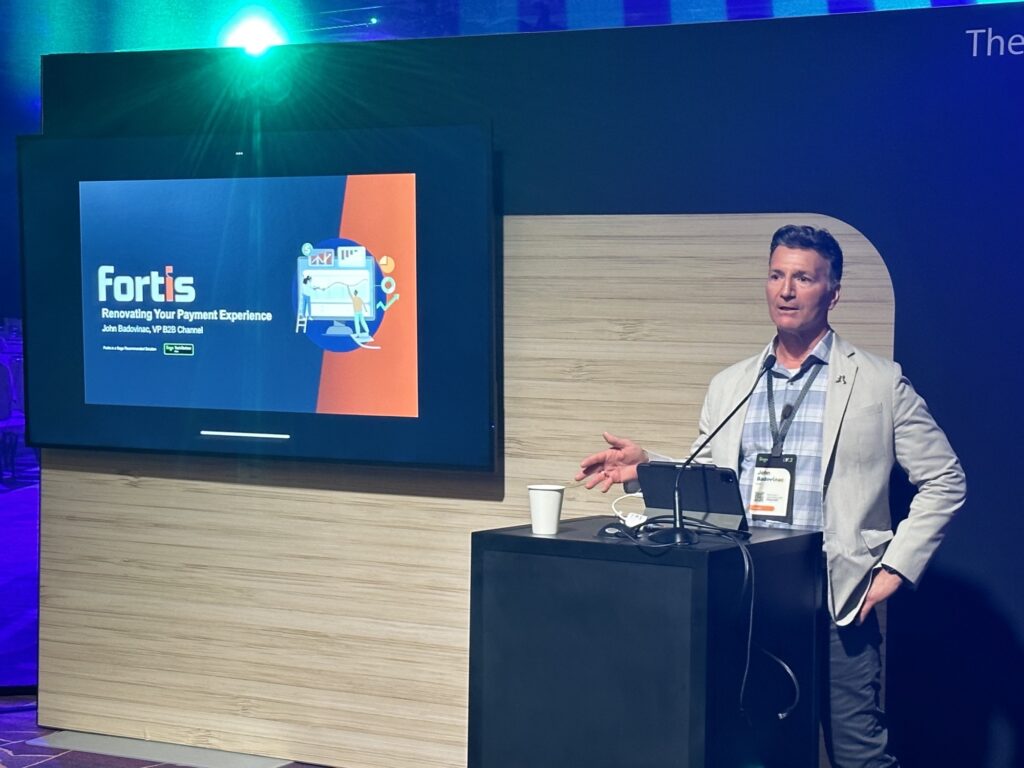
John Badovinac, VP of B2B Channel at Fortis, hosted a session on “Time to Renovate Your Customers’ Payment Experience,” emphasizing how customizing the entire payment experience can enhance customer satisfaction and streamline operations. “Fortis provided an overview of how no other payment provider can match our award-winning technology, world-class onboarding, and decades of ERP installation experience,” said John. 

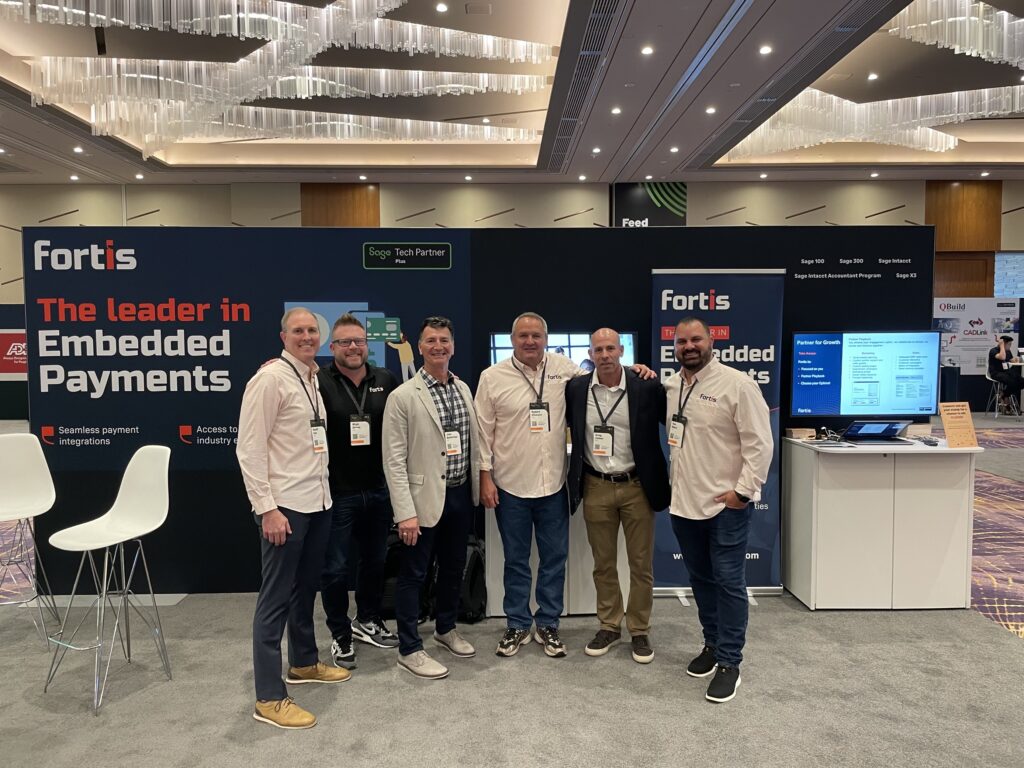
In addition to John’s session, the Fortis team answered questions and shared their B2B payments expertise at Booth #417. Our partnership and product experience leaders enabled businesses to learn more about how to fortify their payments. The Fortis team at our booth included: 

  • Miah Green, SVP of VAR Partnerships 
  • Tom Nanci, SVP of ERP Product & Experience 
  • Geoff Cox, ERP Product Director 
  • Rob Ullmann, ERP Partner Director 

Beyond our ERP expertise, we also enjoyed some fun by hosting the Top Golf game at Summit After Dark alongside Scanco, Cloud at Work, SPS Commerce, APIWORX, and Avalara. We also contributed to the Money Jar raffle, a giveaway of $1,000, and had various giveaways of our own at our booth. 

Overall, we were thrilled to attend and contribute to the Sage Partner Summit and spread the word about our award-winning API technology. 

Looking to be our next Fortis partner? Discover how we work with Sage 100, Sage 300, Sage X3, and Sage Intacct

Embedded Payments: Powerful Technology That’s Delivering a Better Way To Do Business  

Think about a typical dinner delivery. Maybe it’s Friday night, and a cheesy pizza has just arrived steaming hot right to your front steps. You take the pie, thank your driver and shut the door — but wait, when did you pay?  

It almost feels like you didn’t.  

As consumers, we’re used to the ease of ordering through apps like UberEATS and Amazon and completing our purchases without tracking down credit cards or counting out cash. Now these types of embedded payment experiences are becoming commonplace for businesses across a myriad of other industries, including B2B markets, to the benefit of buyers and sellers alike — as well as the software providers who support them.  

Why everyone wins with embedded payments 

Customers aren’t the only ones who appreciate the convenience of payments being seamlessly woven into transactions. There are a multitude of ways embedded payments help businesses, too. Fortis Chairman and CEO Greg Cohen has seen many innovations over his 20-year career in payments and was an early advocate of integrated technology. 

“A fully embedded payments experience is better for the person making the purchase because it’s just simple and easy, so that’s inherently going to drive engagement and increase the likelihood of repeat purchases,” Cohen said. “The business also gains efficiency in the back office, where processes such as posting payments to the general ledger are automated and not manually input.” 

Additionally, embedded payments have been shown to improve cash flow by reducing collection costs and shortening the time accounts payable are outstanding, which can be crucial in industries like healthcare where more than 41% of adults in the U.S. have medical debt and invoice write-offs are high.  

“It’s not just about facilitating payments anymore,” Cohen said. “Businesses need to turn the traditional payments acceptance approach into a “commerce facilitation” mindset and create a true, competitive advantage. The platforms and payments partners who do that will win in the long run.” 

What software providers, marketplaces and developers should look for in a payments partner 

As businesses search for more ways to boost sales, cut costs and keep customers happy, they’ll increasingly seek out software and digital platforms which help them do all three simultaneously.  

Providers can still monetize payments as an additional revenue stream while helping their business clients gain a competitive edge through commerce enablement. However, which payments partner is “the best” depends on the needs and goals of the platform and the people using it, according to Mark Bishopp, Senior Vice President and Head of Embedded Payments/Finance and Partnerships.  

“At Fortis, we help do the heavy lifting, taking the weight of risk and data management off our partners’ shoulders,” Bishopp said. “And yes, embedded payments are industry agnostic, but that doesn’t mean the payments partner should be. We believe it’s important to know the nuances of the verticals you’re serving.”  

How Fortis enables commerce by taking a different approach to embedded payments 

Payments partners come in all shapes and sizes, but Fortis focuses on specific market segments where the company has deep expertise. With Cohen at the helm, Fortis continues to offer tailored experiences to its clients in hospitality, healthcare, retail and wholesale distribution in addition to ERP systems.  

“If somebody just wants a set of APIs, there’s a bunch of us who can do that,” Cohen said. “But if you need or want a guided journey as you go up and down the paradigm of commerce options, we provide that personalization and specialization. And the journey is different for every software provider, and in some cases, it’s different for every merchant using the platform.” 

This intricate knowledge and personal service gives Fortis the ability to create new features and functions that a one-size-fits-all sandbox can’t supply. For consignment retail shops, that means developing embedded payout capabilities to streamline the often-laborious tasks of accounts payable. For chiropractors and physical therapists, it’s click-to-pay invoices and embedded inventory functionality for medical equipment.  

“We’re here for the long-term and evolution of your journey. As a Fortis partner, you can go up or down the tech and services stack based on your business needs, and that is really unique,” Cohen said. “No matter what comes next, we’re going to keep listening to the market and following our customers so we can deliver everything they need to be successful. And that’s going to be different for the pizza guy than the doctor’s office.”  

For more information about partnering with Fortis, contact us here

Partner Spotlight: Ricochet POS 

Ricochet partnered with Fortis to go beyond the basics of a payment integration and added tremendous value to their product by tapping into next-gen embedded payment features.

Creating solutions for niche business has many rewards. For Ricochet, they were able to build a platform to free clients from the constraints of old technology and outdated practices. At the same time, they continue to craft their product around the direct feedback from consumers and enhance the platform.

As a part of the specialty retail and consignment verticals, they supply their end-users a way to manage inventory, keep track of consignees, and other general business functions. The owners of Ricochet noticed that when it came to payments it was up to the customer to find a third-party provider to fill this need. While stand-alone solutions would perform the basic tasks, managing the communication between the POS and the payment terminal would be difficult for front and back of house employees. That pain-point had their team redirecting their product roadmap, looking for an integration.

There exist several payment companies out there who perform the basics of taking and processing credit cards. Through the field of options, Ricochet further explored the rich features that combine several types of integrations and bundle them under their POS system.

After a deep PayOps evaluation with Fortis, Ricochet was given a plan to embed payments with the Fortis Platform’s robust omni-channel payment systems and their innovative features that help merchants further connect with their customers. The newly updated Cloud 2.0 gateway integration creates one API that Ricochet develops for. Additionally, with this update, they relieve their technical burden of supporting terminal deployment because of Fortis’ rapid terminal deployment online management system.

Now all POS and payment features are under one system making it more efficient for staff to track payments. With the text message payment link feature, merchants can send a text message to their customers who are making phone orders or deposits and request payments. By offering digital receipts, their customers are now tapped into a digital atmosphere. It is now possible to submit their ratings on their experience without moving to another platform. Merchants have the opportunity to display interactive marketing messages on their customer’s phone.

Fortis goes beyond the basics of taking payments and provides a value-add platform that helps Ricochet develop a robust and multi-functional product. To become a Fortis partner and do the same for your business or software, visit our partner page.

Fortis is a Sage Recommended Solution

The Fortis Platform is a Sage Recommended Solution that seamlessly integrates with Sage enterprise resource planning (ERP) systems and products.  This makes it easier than ever for businesses to accept payments. As the leader in embedded payments, and a Sage tech partner plus, we are dedicated to elevating Sage solutions and providing more value to your customers. 

As a Sage Recommended Solution and Sage Tech Partner, the Fortis Platform combines the latest payment technology with industry-leading expertise to provide a unified commerce experience in multiple channels. In addition to allowing clients to send electronic invoices and get paid immediately, a customer using the Fortis Sage integration can expect: 

  • Level II and Level III Data Enrichment 
  • Flexible Pricing Options 
  • Payment Acceptance (CC, ACH & EFT) 
  • Omni-channel Capabilities 
  • Click-to-Pay/Email Invoicing 
  • Online Customer Portal 
  • Customizable Reporting 
  • Unrivaled PCI Compliance Reputation 
  • Access to Industry Experts 

Even more, our award-winning API set allows for platform customization, built to fit your specific business needs. 

If you use Sage products, consider elevating your payment experience by using the Fortis Platform. To get started with Fortis, click here.